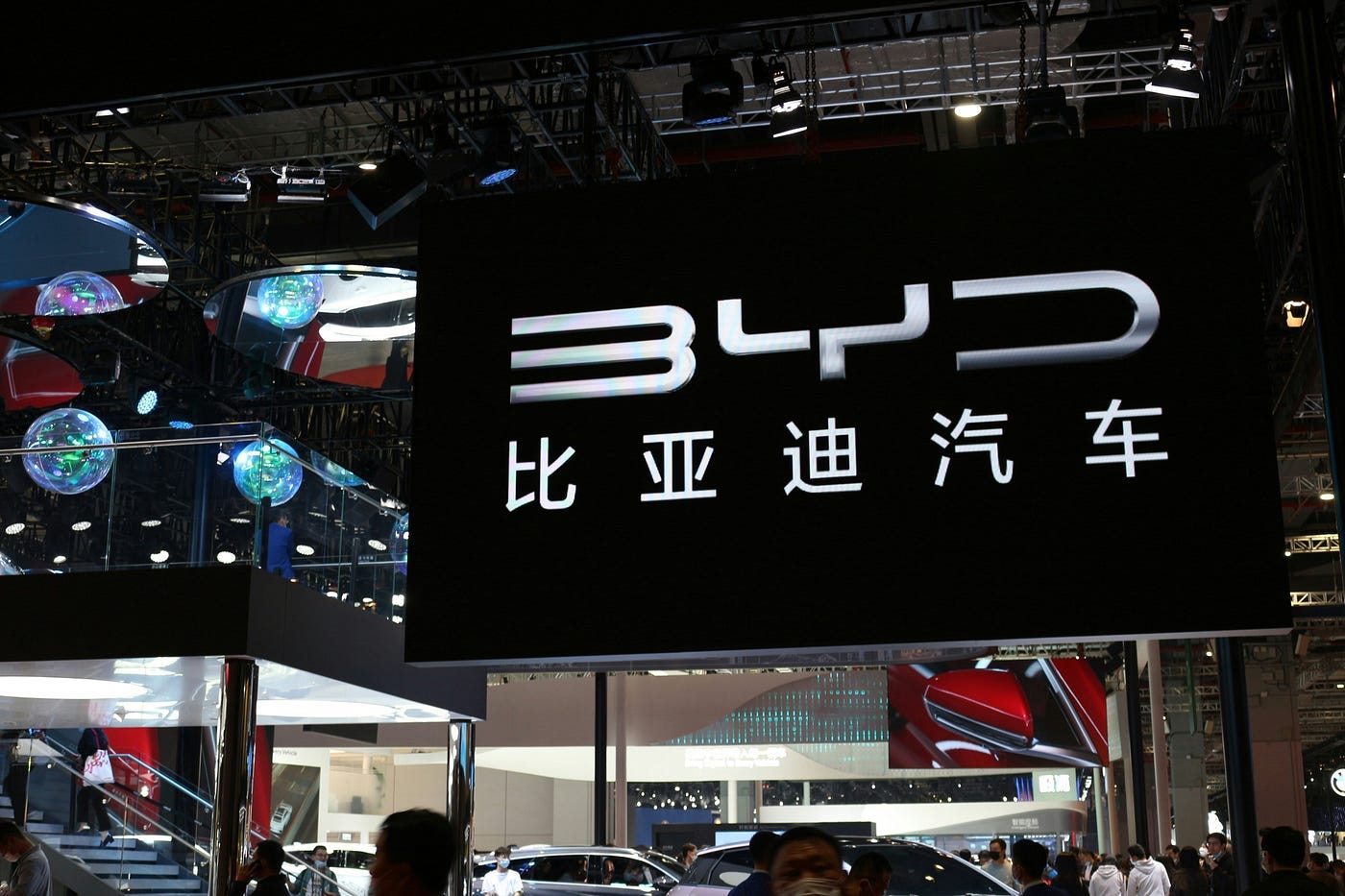
BYD Sold Last Year’s Cars as New 2026 Models. The Cost Is Far Larger Than AU$60 Million.
The BYD model-year scandal exposed something important about how electric vehicle depreciation works, and why customers who ordered 2026 cars have every right to be upset about receiving 2025 ones.
BYD has spent the past two years accomplishing what almost no newcomer manages in the global car industry: it outsold Tesla in Europe, penetrated markets that established brands spent decades building in, and positioned itself as the EV the average buyer could actually afford. Then came a July that nobody at the company will want to remember.
At the exact moment the brand needed to demonstrate reliability to international buyers, it was forced to admit it had delivered cars assembled in 2025 to customers who had signed contracts specifically for 2026 models. That admission, and the way BYD initially chose to handle it, turned an administrative error into something considerably worse.
What BYD Actually Did
According to a report confirmed by multiple outlets, exactly 1,265 buyers in Australia who had purchased BYD models including the Atto 3, Sealion SUV, and Shark pickup truck discovered, upon checking their paperwork, that their supposedly brand-new vehicles had been built a full year before delivery. According to BYD, the error was administrative: an internal system mistakenly recorded factory shipping dates instead of the actual assembly dates. The vehicles themselves are mechanically identical. The 2025 and 2026 builds carry the same hardware, the same warranty, and meet the same regulations.
None of that explanation addresses what actually happened.
The company knew its order books were full and its delivery timelines were stretching. Rather than informing customers of the situation and offering them the option to wait for a 2026-built vehicle or accept an earlier 2025-built delivery at a negotiated price, it simply shipped the older stock and said nothing. The problem surfaced publicly because a frustrated buyer posted on Facebook and called for a class action, after which awareness spread, and the full scale of the mistake became visible.
BYD initially offered €650 per affected customer as compensation. The offer lasted about as long as it takes a Facebook post to go viral. Buyers rejected it almost universally, and the backlash forced the company into a reversal. BYD is now offering every affected customer either a full refund of the original purchase price or a free swap for a genuinely new 2026-built vehicle. The total bill for this resolution could reach approximately AU$60 million.
Why a Model Year Gap Hits Harder on an EV?
Mechanically identical is not financially identical, and this is where the actual damage sits.
In the used car market, build year functions as a proxy for a vehicle’s remaining useful life on the depreciation curve. A 2025-registered car is worth less than a 2026-registered equivalent, all else being equal, because it has one fewer year before buyers perceive it as aging. For electric vehicles specifically, that effect is magnified. EVs already depreciate more steeply than combustion equivalents in most markets, partly because buyers expect rapid battery technology improvements and partly because the second-hand EV market is still finding its equilibrium. Forcing a 2025 build date onto a car a customer intended to trade or resell in three to five years can represent a real financial loss of several thousand euros, not a theoretical one.
The timing compounds the problem. BYD entered 2026 already managing a 30% year-over-year decline in global sales, its most sustained drop since the pandemic era. First-quarter profit fell more than 55% even as the company was accelerating into export markets to offset weakening domestic Chinese demand. The Australian scandal became public at precisely the moment BYD needed its international presence to be working in its favor.
There is also a structural vulnerability that this incident exposes. Established automotive brands like Volkswagen or Toyota survive product controversies because decades of accumulated customer goodwill buffer the impact. A brand that European and Australian buyers only began encountering a few years ago does not carry that buffer. Trust takes a long time to build through consistent, honest interactions. It does not require a big mistake to lose significant amounts of it quickly. BYD did not inform its customers. It did not ask them. It did not disclose what it was doing and let them decide. The absence of that basic transparency is what converted an internal logistics problem into a public trust crisis at the worst possible time.
Tesla Doesn’t Need AI5 in Its Cars. It Needs It in Its Robots.
Three weeks ago, a Samsung engineer posted something on LinkedIn that he probably shouldn’t have. No announcement, no embargo breach notice, just a quiet technical observation about a chip he had helped prepare for manufacturing. A few hours later, the post was gone. The Korean press had already picked it up, and the inf…
What Audi Did Instead
While BYD was managing the fallout from a self-created problem, Audi was publishing an announcement that illustrated a different approach to the relationship between a manufacturer and its customers.
The third-generation Audi Q3 launched as an all-new model in 2026. One year later, Audi has already announced its 2027 model year updates. There is no exterior restyling. This is not a response to complaints or a crisis communication exercise. It is a decision to enrich the product proactively, based on the straightforward logic that the same base price should buy a better car this year than it bought last year.
What changed is substantive. Four features that previously required an optional upgrade or a higher trim selection are now included in every Q3 as standard: heated front seats, dual-zone automatic climate control, keyless entry and start, and a reversing camera. The most significant new addition to the options list is a 10.9-inch front passenger display, a feature previously reserved for Audi’s more expensive models. This closes a visible gap between the Q3 and its larger siblings, the Q5, Q6, and Q7, in a way that matters to buyers deciding between segments.
The adaptive cruise control has been redesigned for 2027. It can now use live online connectivity and crowdsourced traffic data to predict the average speeds on a given route before reaching slower sections, adjusting following distance and speed proactively rather than reactively. This is not a marketing feature. It is a genuine functional improvement to a system that most Q3 owners use regularly on motorway journeys.
For buyers who tow, the plug-in hybrid version gains 600 kilograms of additional towing capacity, moving from 1,400 to 2,000 kilograms. What sets a small trailer apart from a caravan, boat, or lightweight horse trailer is the practical utility it adds, making a car more adaptable over years of ownership without forcing a purchase of a bigger vehicle.
Connectivity keeps pace across the rest of the interior. The wireless charging pad’s power output ranges from 15 to 25 watts. Rear passengers receive three USB-C ports capable of delivering up to 100 watts each. Applications, like Microsoft Teams, are part of the Android-based infotainment system. The steering wheel has been redesigned with a combination of tactile touch surfaces and haptic feedback controls, a choice that will divide opinion, given that Volkswagen Group has been reinstating physical buttons across its lineup in response to widespread driver feedback. This is one update where Audi is moving in a different direction from the broader group trend.
Orders in Europe are already open, with production starting in September 2026. The pricing is unchanged from the outgoing model: €45,900 for the standard Q3 and €48,000 for the Sportback. Receiving more equipment at the same price is, in straightforward terms, a better deal than the one available last year. A new 265-horsepower 2.0-litre turbocharged petrol version with quattro all-wheel drive joins the lineup from €66,000, but will be a rare sight in France: the country’s progressive eco-penalty system adds a malus tax of approximately €80,000 on top of the purchase price, placing this version well beyond the reach of most buyers.
The contrast between these two stories is not subtle. One brand spent July 2026 explaining why customers received something other than what they agreed to pay for, and learning publicly how much it costs to fix that mistake after the fact. The other announced, quietly and without drama, that the car it sold its customers last year is better this year, at the same price, as a matter of course.
In a market where premium compact SUVs compete fiercely, and trust is a primary purchase driver, that difference in approach is exactly what separates brands that grow their reputation from those that have to spend resources rebuilding it.
Thanks for reading. Let me know your thoughts in the comments. Don’t forget to follow us and subscribe for more analysis. If you like space and physics innovations, follow The Nov Science for news related to science.


