
Einstein’s Biggest Mistake Just Got Proven Wrong — Here’s Why Quantum Computers Depend On It
The 2025 experiments that ended physics’ longest-running debate and unlocked tomorrow’s technology

For nearly a century, two of history’s greatest minds locked horns over a fundamental question about reality itself. No one could solve it for that duration since the tech wasn’t available. But in 2025 — which the UN declared the International Year of Quantum Science — two research teams, one in China and one at MIT, finally ended this legendary debate.
The verdict? Albert Einstein was wrong.
Here’s what happened, and why it matters more than you think.
The 1927 Showdown Nobody Could Settle
Picture this: Brussels, 1927, the famous Solvay Conference.
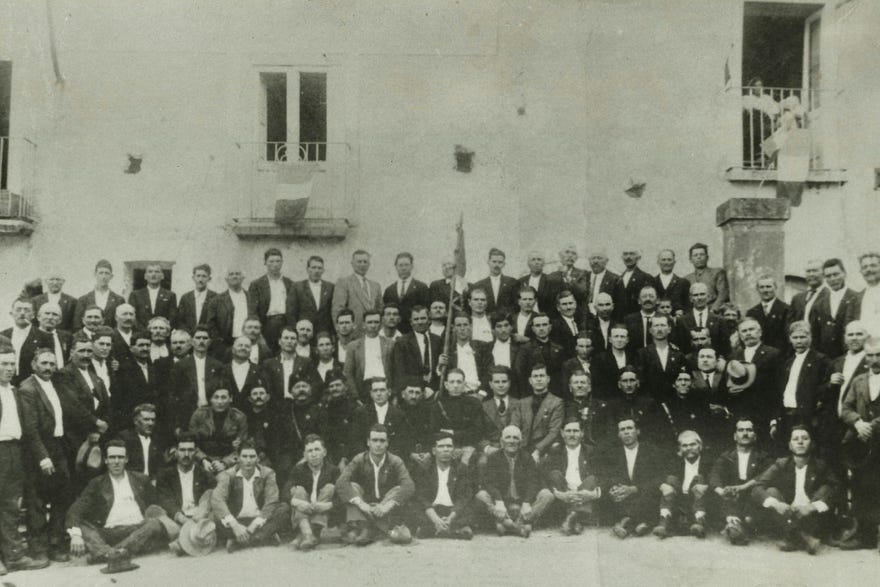
The photo everyone knows includes the smartest scientists of that time. And right in the middle of this genius assembly, an intellectual battle was brewing that would shape physics for the next century.
On one side: Albert Einstein. On the other hand, Niels Bohr. Their battlefield? Something called the complementarity principle.
To understand what they were fighting about, you need to know about the double-slit experiment. If you’ve studied science or work in the field, you’ve definitely heard of this one. First seen in 1800, the process is easy: passing light through two narrow slits creates an interference pattern — light and dark stripes — on a screen. This pattern proves light behaves like a wave.
But here’s where it gets weird.
When you try to determine which slit each photon passes through, the interference pattern disappears, and light suddenly acts like a particle instead. Bohr said this was a fundamental rule of nature: you can never observe both wave and particle properties of light simultaneously. It’s one or the other, never both at the same time.
Einstein found this idea unbearable. For him, every particle had to have a defined position and velocity. He famously said, “God does not play dice with the universe.”
Einstein’s Clever Trap (That Took 100 Years to Test)
To prove Bohr wrong, Einstein imagined a brilliant modification to the experiment.
He proposed mounting the first slit on ultra-sensitive springs. The idea was genius: when a photon passes through the slit, it gives it a tiny nudge. By measuring this movement, you could theoretically know which slit the photon went through while still keeping the interference pattern on the screen.
If it worked, Bohr’s complementarity principle would crumble.
Bohr responded with a subtle but devastating counterargument. He pointed out that for the slit to be sensitive enough to detect a single photon’s impact, it would have to be so light that it would obey quantum laws itself. And according to Heisenberg’s uncertainty principle, if you know the slit’s momentum precisely, its position becomes fuzzy — and that imprecision would automatically destroy the interference pattern.
The problem? This thought experiment remained just that for nearly a century. Creating a slit sensitive enough to detect a single photon was impossible because of the lack of technology.
That’s where 2025 comes in, and things get spectacular.
https://www.amnh.org/exhibitions/einstein/legacy/quantum-theory
The MIT Breakthrough That Changed Everything
In July, a team at MIT led by Nobel laureate Wolfgang Ketterle achieved what they call “the most idealized version of the double-slit experiment ever conducted.” Their approach was radically different from anything before.
They used individual laser-cooled atoms as slits.
These atoms, cooled to temperatures near absolute zero and trapped in a lattice of laser light, became the smallest slits you could construct. The team then sent photons through these atomic slits and observed what happened when a photon slightly nudged an atom as it passed.
Famous double-slit experiment holds up when stripped to its quantum essentials
MIT physicists performed an idealized version of the double-slit experiment, stripping it to its quantum essentials…news.mit.edu
The results confirmed exactly what Bohr predicted. As soon as it became possible to obtain information about the photon’s path — even indirectly through an atom’s movement — the interference pattern faded.
But the story doesn’t end there.
China Takes It Even Further
Another group, under the direction of Pan Jianwei, continued the experiment in December. His team at the University of Science and Technology of China used a single rubidium atom trapped in an optical tweezer and cooled to its fundamental state of motion.
This single atom became the mobile slit Einstein imagined nearly 200 years ago.
The elegance of this experiment stems from the researchers’ ability to control the atom’s position uncertainty by changing the laser trap’s depth. When the atom was loosely held, it oscillated enough to reveal the photon’s trajectory. But then the interference pattern disappeared.
Chinese Physicists Settle Einstein and Bohr’s Quantum Debate
In a landmark study that brings a definitive close to one of the most famous debates in modern physics, a team of…cold-facts.org
When the atom was firmly held, its oscillation became undetectable. The photon’s path remained unknowable, and the interference reappeared. Once more, as Bohr predicted.
Researchers watched a smooth switch from wave to particle form as they tweaked the atom’s quantum fuzziness. Basically, the more they tried to measure the impulse received by the slit precisely, the more quantum entanglement between the photon and atom increased, and the more the interference pattern blurred.
It’s a direct and spectacular confirmation of the complementarity principle.
What This Actually Means for Reality
What’s remarkable for both experiments is that they demonstrate it’s not the measurement itself that destroys the interference pattern — it’s quantum entanglement. That mysterious connection you’ve heard about between two particles? That’s the real culprit.
As the MIT team emphasized, it’s not Einstein’s imagined springs that matter. It’s the quantum fuzziness of the atoms and their entanglement with the photons.
The reviewers of the Chinese study, published in Physical Review Letters, called the experiment a “significant contribution to the foundations of quantum mechanics,” and “a textbook realization of a century-old thought experiment.”
Wolfgang Ketterle stated that Einstein and Bohr would never have imagined it would one day be possible to perform such an experiment with individual atoms and photons.
So what does all this really mean for our understanding of the universe?
These experiments prove something odd: nature has its own privacy setting. When you try to cheat by observing the slit, the universe scrambles the results to keep its secrets. This isn’t a technological limitation — it’s a fundamental rule of reality.
This discovery also marks what researchers call a “quantum-to-classical transition” — the precise point where the strangeness of the quantum world gives way to the more familiar behavior of classical physics. It’s like we’ve found the exact border between two realms of reality.
The Poetic Timing
There’s something poetic about these discoveries arriving precisely in 2025, the year chosen by the United Nations to celebrate the centenary of quantum mechanics.
As Yo Kong Li, co-author of the MIT study, noted: “It’s a wonderful coincidence to clarify this historic controversy the same year we celebrate quantum physics.”
Chinese Physicists Prove Einstein Wrong in Quantum Experiment - GreekReporter.com
A century-old debate ends as physicists prove Einstein wrong using single photons to test quantum theory with…greekreporter.com
So Einstein was wrong on this specific point. Being wrong, he asked for guided research for an entire century, which ultimately led to these extraordinary experiments.
That’s the greatest lesson here. Even the errors of geniuses push the boundaries of our understanding. Pretty mind-blowing when you think about it.
These results also open new perspectives. Pan Jianwei’s team plans to use their experimental setup to explore other unresolved questions in quantum physics, particularly the relationship between decoherence and quantum entanglement. Meanwhile, the MIT team wants to observe what happens when there are two atoms per site in their lattice instead of just one.
Why You Should Care About Quantum Weirdness
If you’re wondering what quantum physics has to do with your daily life, think about this: the principles these experiments just confirmed are the foundation of tomorrow’s quantum technologies. Quantum computers, quantum cryptography, quantum sensors — all of it relies on these same strange properties that Einstein found so uncomfortable.
The oddness he wouldn’t accept will change tech in the next ten years.
If these advances in quantum physics and artificial intelligence fascinate you, and you’re wondering how these technologies will transform our world in the coming years, you’re in the right place. I write about the intersection of advanced science and our technological future — no fluff, just the real implications of what’s happening in labs right now.