

How China Destroyed Europe's Auto Industry in 15 Years (And Why There's No Way Back)
European manufacturers are closing factories, laying off workers, and partnering with the companies destroying them.

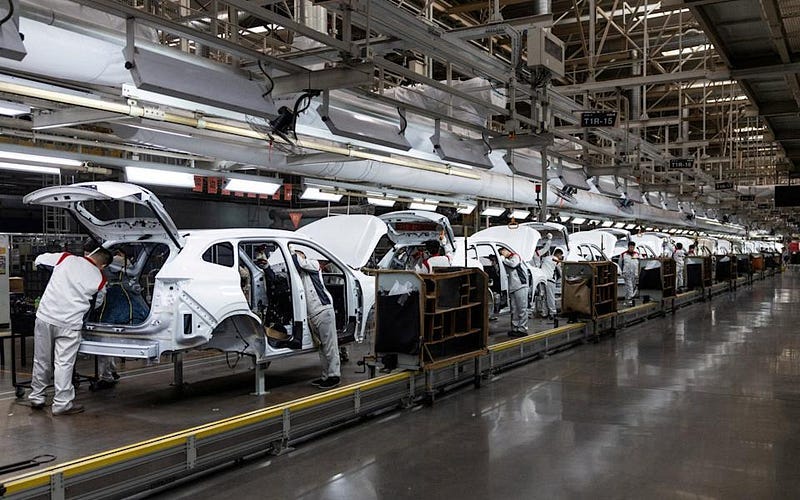
Between 2010 and 2020, something extraordinary happened in China that European automakers completely missed. While Western manufacturers were clinging to diesel engines and fighting emissions scandals, Chinese companies were building an entirely different automotive industry from scratch.
They weren’t just making electric cars. They were rewriting every rule about how cars get made, sold, and powered.
Today, BYD, Geely, NIO, and a generation of Chinese manufacturers are flooding global markets with electric vehicles that cost 30–40% less than European equivalents while matching or exceeding their quality. This isn’t a temporary disruption. This is a complete restructuring of the global automotive industry, and European manufacturers are facing an existential crisis with no clear path to survival.
Let me explain how we got here, why it happened so fast, and why the solutions everyone is proposing won’t actually work.
The Tesla Breakthrough That Changed Everything
When Tesla made its breakthrough in 2011 and showed the world what electric vehicles could be, every Chinese manufacturer saw an opportunity. For Chinese companies, this transition happened without any problems. They didn’t have a century of mechanical engineering history to unlearn as Europeans did.
Very early, well before Dieselgate, BYD, Geely, and Chery began developing electric vehicles, the best way possible: with a software-first approach from the start. A new generation of manufacturers emerged, born in the post-Tesla era, companies like XPeng, NIO, and Li Auto that positioned themselves even more aggressively as technology companies rather than traditional automakers.
In 2013, Xi Jinping took over leadership of the Chinese Communist Party and immediately became a massive ally for these manufacturers. In 2015, he unveiled the “Made in China 2025” plan, probably the most massive government initiative since the proclamation of the People’s Republic of China in 1949.
This initiative aimed to position the country as a first-rank technological power by 2025. Xi Jinping’s objective was clear: he didn’t simply want to catch up with Western countries. He wanted to surpass them.
The $230 Billion Advantage Nobody Could Match
Ten strategic sectors were identified, including robotics, artificial intelligence, semiconductors, and, of course, electric vehicles. Literally tens of billions of yuan were invested to support the development of these industries.
Brand new universities and research bureaus sprouted up, created specifically for these groundbreaking technologies. By 2016, China was already training 4.7 million engineers per year.
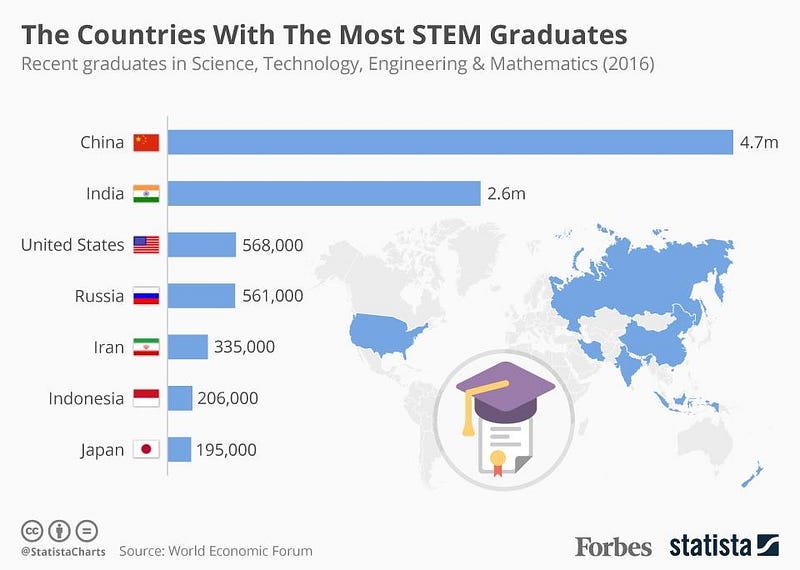
That’s eight times more than the United States in absolute terms during the same period.
Adjusted for population, it’s still twice as many. That’s enormous.
In parallel, the entire industrial fabric of the country transformed. Thousands of SMEs were subsidized to modernize their industrial tools. Production lines were massively robotized. The first Chinese high-tech supports emerged: Huawei, Xiaomi, Tencent, and DJI.
Cities like Shenzhen have nothing to envy in Silicon Valley. The entire country gradually transformed into an immense innovation ecosystem. And this benefited Chinese electric vehicle manufacturers.
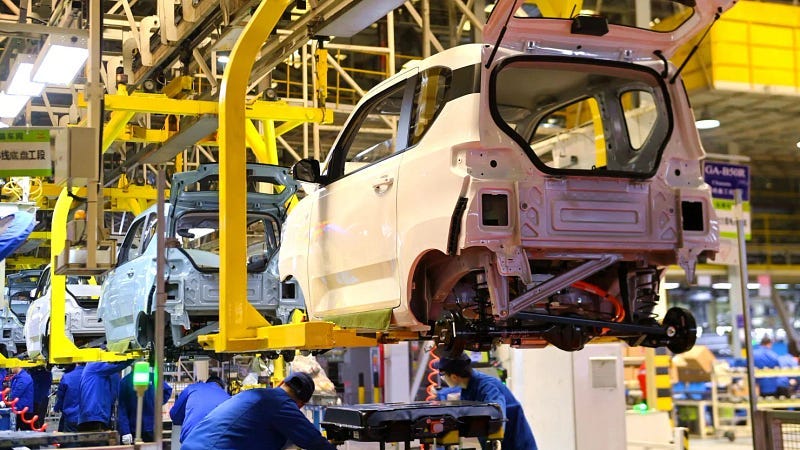
Between 2009 and 2023, China’s government gave about $230 billion in subsidies to its electric vehicle industry, according to the Center for Strategic and International Studies, an American research organization.
With that single figure, you should understand why Chinese manufacturers are mechanically unbeatable. They’re absolutely not playing in the same league as everyone else. No Western government could subsidize its industry on this scale, neither legally, nor politically, nor even budgetarily.
The Vertical Integration Model That Europeans Can’t Copy
It’s largely thanks to this ecosystem that Chinese manufacturers could implement the ideal model for building electric vehicles: vertical integration. They could easily do this because they had all the expertise locally in the country, and very often in the same city, Shenzhen.
Among these capabilities, there’s one that once again made all the difference: battery manufacturing. Batteries are the nerve center of the war when discussing electric vehicles, just as much as software. The reason is that batteries are by far the most expensive component of an electric vehicle. The battery accounts for approximately 40% of a vehicle’s production costs for the factory. That’s really significant.
So if you want to create an excellent ecosystem of electric manufacturers in your country, you’re also obligated to have excellent battery manufacturers. One cannot exist without the other.
CATL: The Battery Giant Built in 14 Years
It’s quite logical that in the early 2010s, the Communist Party strongly encouraged many companies to enter battery manufacturing. When I say “encouraged,” it’s the same recipe again: massive subsidies, tax credits, zero-interest loans, and so on. And once again, it worked.
Two Chinese companies really broke through in the field. The first is CATL.

CATL is a company founded in 2011. To give you an idea of who we’re talking about, today, just 14 years later, CATL has a market capitalization of $243 billion. That’s more than Volkswagen.
How is that possible?
How did they create a global champion in less than 15 years? There are two main reasons.
The first is very intelligent: total control of the supply chain.
To manufacture batteries, we primarily need strategic minerals. For lithium-ion batteries, those that would equip the first modern electric vehicles, we primarily need lithium, cobalt, nickel, and manganese.
To obtain all this, the Chinese government deployed its secret weapon: authoritarianism. Very early, well before Europeans became interested in electric vehicles, Beijing ordered its large state-owned enterprises and private conglomerates to take stakes in mines around the world where these famous minerals necessary for battery manufacturing are found.
This notably included several lithium deposits in Chile. In the Democratic Republic of Congo, the Chinese bought 15 of the country’s 19 cobalt mines, located in the Haut-Katanga region.
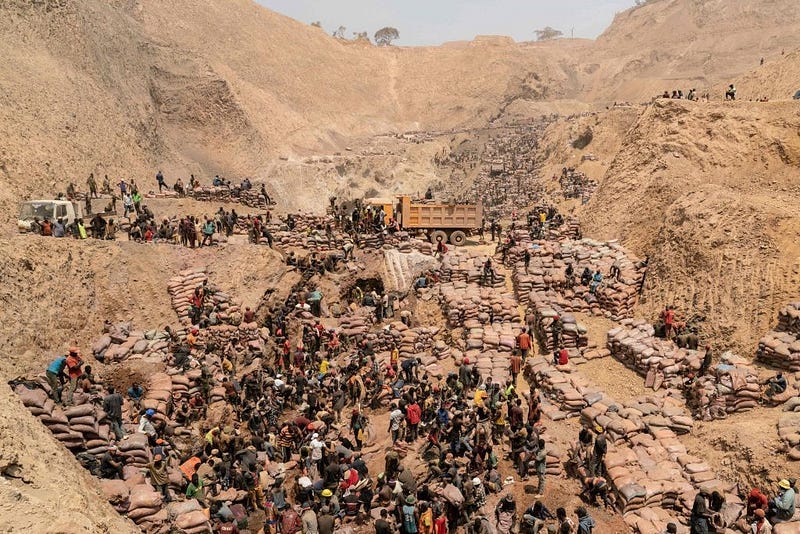
In Indonesia, 75% of nickel mines are now controlled by Chinese companies, according to Reuters.
This example once again illustrates the strength of socialism with Chinese characteristics. In the snap of a finger, the government can gather a small army of companies that will hunt as a pack to secure the country’s strategic interests.
Not all Chinese manufacturers followed CATL. There’s one that still resists the CATL invasion: BYD.
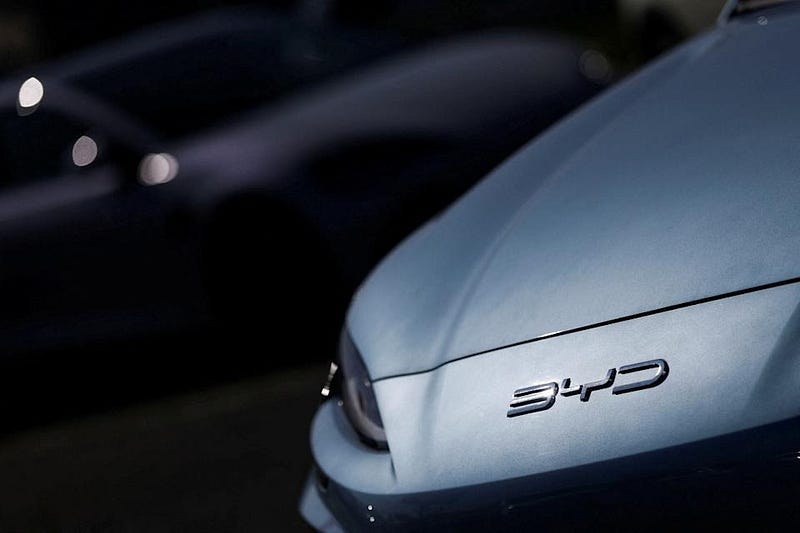
At BYD, they design and produce all their batteries internally. It’s a unique case in the world, explained because BYD was primarily a battery manufacturer before even launching into automobiles.
As a result, when the government heavily subsidized the sector in the 2010s, BYD took advantage to build its own giant internal giant. With this, BYD pushed the concept of vertical integration to the extreme. For some of its models, only the tires and windows are not manufactured internally.
In the globalized world we live in, managing to do this is quite an insane feat. All this again allows BYD to reduce production costs drastically. An element that, as you’ll see, will be important for what follows.
The COVID Crisis That Forced Chinese Expansion
In early 2020, China was hit hard by the pandemic. This period marked an absolutely monumental halt for the Chinese economy. For the first time in 40 years, the country recorded negative growth in the first quarter of 2020: -6.8%.
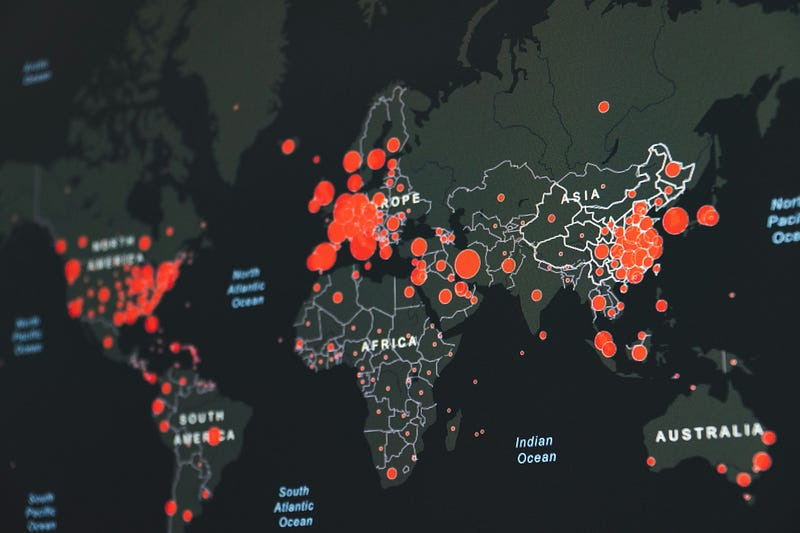
The central government was strongly criticized. Entire metropolises found themselves under quarantine for more than two years. Mechanically, consumption drastically decreased because, yes, households confined means households that no longer consume.
Chinese manufacturers who had not reduced their pace found themselves with enormous production surpluses — hundreds of thousands of vehicles already produced that couldn’t find buyers. The situation was catastrophic for them because, unlike groups like Volkswagen that depend on multiple markets around the planet, Chinese manufacturers until then sold only in China.
To avoid cascading bankruptcies, there was only one thing left for Chinese manufacturers to do: find new markets and export their vehicles there. And it’s in this rather improbable set of circumstances that, at the beginning of 2021, well before the predictions of many experts, Chinese automobile manufacturers set out to conquer the planet.
5,253,000 — that’s the number of Chinese electric vehicles that were shipped abroad between 2021 and 2023. An 800% increase compared to the two previous years. We can talk about a tidal wave.
I wasn’t overstating things when I said that BYD really embraced vertical integration. They had five giant cargo ships like this built to export their vehicles themselves to the four corners of the world.
This lightning acceleration of exports immediately sowed panic worldwide, and it’s understandable. These Chinese vehicles destined for export are already excellent in many aspects. They have similar technology, use the latest CATL batteries, and the models cost 30% less than their competitors.
Faced with this offensive, many countries brought out heavy artillery. India, Turkey, and the United States nipped Chinese vehicle competitiveness by imposing massive customs duties to protect their national markets. The United States even went so far as to impose 100% customs duties on Chinese electric vehicles.
If Americans can afford to do this, it’s because they risk no reprisals from Beijing. American manufacturers like Ford and General Motors sell almost nothing in China anymore. So Beijing has no pressure on them.
Why Europe Became China’s Open Market
Tesla is the exception, selling a lot in China, but the Californian company found a workaround. Since 2019, all Teslas sold in China are also manufactured there, at the Shanghai Gigafactory. Incidentally, according to Elon Musk himself, the Shanghai Gigafactory produces the best-finished Teslas; the group also has factories in Germany and the United States.
This illustrates once again the quality of the industrial fabric that’s been built in China in just a few years.
Now, I’ll let you guess which market remained open to all these Chinese exports. Yes, it’s obviously Europe.
So how did this happen?
Why didn’t we impose 100% customs duties like the United States? Well, first, there’s a political reason. Historically, the European Union has a certain tradition of free trade. Imposing 100% tariffs would have been judged somewhat against its nature and especially disproportionate regarding the WTO rules, the World Trade Organization. Rules that the European Union scrupulously respects, unlike others.
Another reason is that European manufacturers, unlike Americans, are still mostly dependent on the Chinese market. Even if the trend is reversing, European manufacturers still sell in China today.
In 2024, Volkswagen still achieved 32% of its entire revenue in China. That’s enormous. For BMW, the percentage for the same year is 29%. So if the European Union decided to impose 100% customs duties to protect its market, Beijing would retaliate instantly with similar measures.
Let me tell you, if a trade war starts between Europe and China, it’s especially Europe that will lose feathers. So better to avoid it.
Why Chinese Manufacturers Are Structurally Unbeatable
Here’s why I say Chinese manufacturers are inherently unbeatable by nature. Remember, around 2015, European manufacturers really struggled to begin their transition to electric for all the reasons we’ve seen. They were clearly behind Tesla, which had a technological and especially software lead.
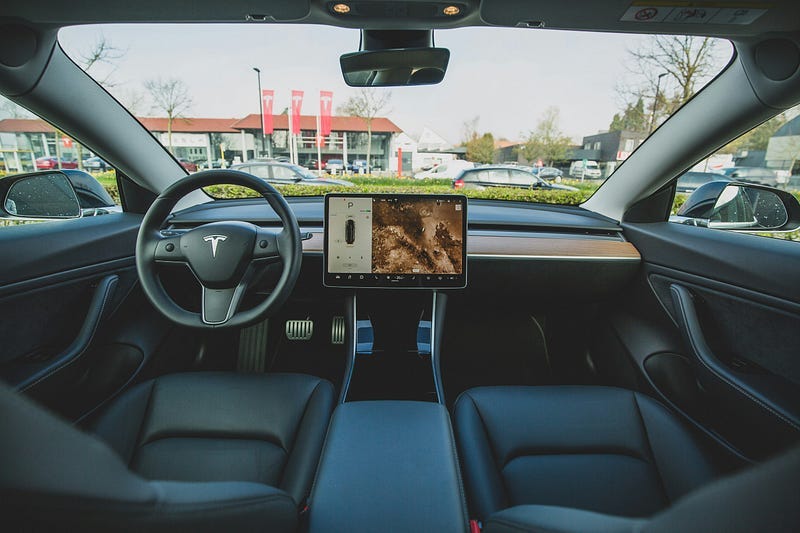
But this European lag compared to Tesla was still largely catchable. There are two reasons for that. First, because European manufacturers remain very good. Yes, I may have painted a somewhat harsh portrait until now because they really had a rough patch in the 2010s, but these remain extremely powerful companies that are wealthy with very high-level engineers and world-class research bureaus.
They certainly had a slow start on electric because of their well-entrenched tradition, but all was not yet lost because Tesla and European manufacturers, despite their differences, play on the same field with the same rules.
That’s very important to understand.
Concretely, they obey the same market logic, the same labor costs, the same trade rules, and the same environmental standards. So, Volkswagen, Renault, and BMW could have copied all of Tesla’s successful methods, combined their manufacturing, copied the cost structures, and followed the Californian company’s financial model to get as close as possible.
They needed some time, and it was going to be difficult; it was going to cost a lot, but it was doable. And that’s somewhat what happened. European electric vehicles today in 2025 have largely improved. The quality gap that existed between Tesla and its competitors in 2018 has drastically reduced.
That’s quite normal because that’s how our economies work. When a new player disrupts a market, others always end up aligning by absorbing its innovations and gradually climbing back up.
It’s exactly what happened with smartphones, for example. Apple turned the game around in 2007 with the iPhone’s release, and so fast that its competitors adapted, absorbed the iPhone’s good ideas, and the competition entirely restructured around this new standard.
What was absolutely not predictable, however, is that in barely 10 years, other manufacturers, in this case Chinese, managed to reproduce exactly Tesla’s innovations but doing it 40% cheaper.
And yes, that’s an immense problem because if Chinese manufacturers succeeded in doing this, it’s solely because they’re not subject to the same rules as everyone else. They’re backed by this highly potent politico-industrial machine that applies socialism with Chinese characteristics to the letter.
It can, as we’ve seen repeatedly, adjust its economic rules whenever national interest requires it, offer state bank loans at extremely advantageous rates, and massively subsidize. That’s what allowed them to build their absolutely unique industrial fabric.
Never could a Western government subsidize its industry on this scale, either legally, politically, or even budgetarily.
Europe’s failed battery supports
Faced with this in Europe, we tried to react. We thought we’d found a breach with these famous Chinese subsidies. As soon as they started exporting their vehicles and batteries at an artificially low price, thanks to subsidies, it resembled an unfair practice.
It’s called dumping.
And in these cases, the WTO explicitly authorizes countries targeted by this dumping to react by imposing so-called compensatory customs duties that allow compensating for these abusive subsidies.
That’s how, as of September 2023, the European Commission announced launching an anti-subsidy investigation into Chinese electric vehicles. The result was the implementation of European compensatory duties of up to 35% on Chinese electric cars.
Faced with these new compensatory tariffs, the only solution left for Chinese manufacturers was to reproduce in Europe the same strategy Tesla used in China with its Shanghai Mega factory: directly produce their cars on the soil of the targeted market to bypass customs duties.
You can imagine, faced with this vital risk for the European industrial fabric, the 27 EU countries absolutely did not let the Chinese establish themselves. They formed a true compact bloc against Chinese manufacturers and, as usual, displayed flawless unity in facing the substantial challenges of our time.
Do you know Viktor Orbán?
Viktor Orbán, prime minister of Hungary, is a notorious Euro-sceptic who has recently made a specialty of denouncing problems he himself creates. Yes, he constantly repeats that Europe is losing momentum and lacks competitiveness, but it’s he who announced with great fanfare in March 2023 the welcome of BYD’s first assembly plant on the old continent.
A project worth over €4 billion that will take place in the Hungarian city of Szeged. Its commissioning is scheduled for January 2026. That’s arriving soon, and it will once again allow BYD to dodge the famous compensatory duties.
Viktor Orbán didn’t stop there. I’ll let you guess with which other Chinese company he also concluded a partnership. This company isn’t an automobile manufacturer. It’s worse.
It’s a battery manufacturer.
Yes, CATL is another Chinese giant. This time, it’s no longer a €4 billion project but €7.3 billion. On the same calendar, the CATL factory should also enter service in early 2026 and will therefore be able to flood the continent with its cheaper and better batteries.
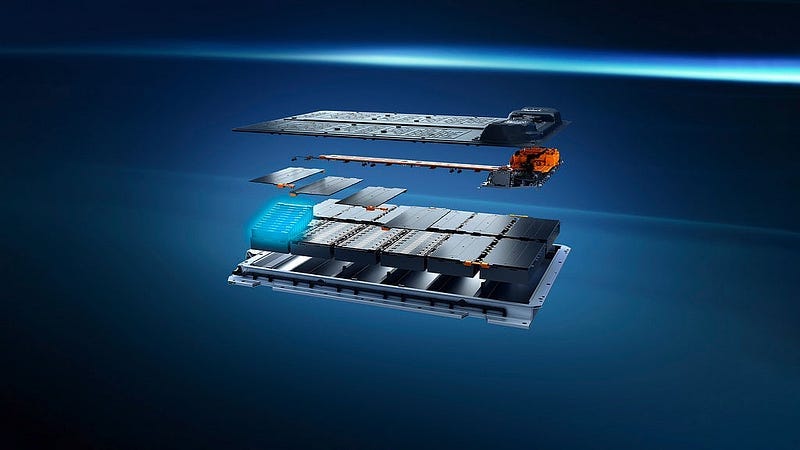
In just a few years, Hungary has become China’s true stepping stone to attacking the European market. If you want a somewhat crazy statistic, Hungary has been for three years the country in the world where China invests the most.
It’s quite crazy.
It’s a country with a population of 9 million.
So, now you’ll have understood, thanks to Hungary, the wolf has entered the sheepfold, and all this really makes us fear the worst for our manufacturers.
The Death Spiral of European Automakers
With everything we’ve said, I think you’ll have understood that our European manufacturers are starting to be in great difficulty facing this Chinese flood.
What doesn’t help is that the old continent’s electric transition hasn’t progressed at all at the expected pace.
Yes, even if the quality of European electric vehicles has clearly improved in recent years, as we’ve seen, they still struggle to seduce the middle classes for the same reasons. They’re still too expensive, their batteries aren’t performing enough, and the charging infrastructure isn’t yet sufficiently developed.
Result: massive investments committed by European manufacturers in electric vehicles struggle to be amortized.
To give you an idea, Volkswagen has already swallowed nearly €60 billion in this transition. That’s a lot.
The impact of the war in Ukraine should be considered. Yes, the conflict literally made energy costs explode in Europe because the Nord Stream pipeline, the one that poured tons of cheap Russian gas across the entire continent, is now shut down.
They find themselves with European manufacturers seeking to make savings by any means to avoid having to sell their Clios for €40,000.
The first visible effect of all this is a genuine rush to the East.
Yes, in recent years, European manufacturers have multiplied factory openings in Eastern European countries where labor costs are cheaper. Volkswagen is now very present in Slovakia. In Hungary, BMW and Mercedes will keep BYD Company. In Poland, it’s the Stellantis group, born from the merger of Peugeot Citroën and Fiat Chrysler, that’s now very present.
With each factory that opens in Eastern Europe, more and more factories in Western Europe are threatened, and that poses enormous problems. In our region, entire cities have developed around the automobile industry and still largely depend on it.
On February 28, another Volkswagen Group factory also closed its doors. It’s the Audi factory in Brussels, the former production site of the Audi Q8 e-tron.
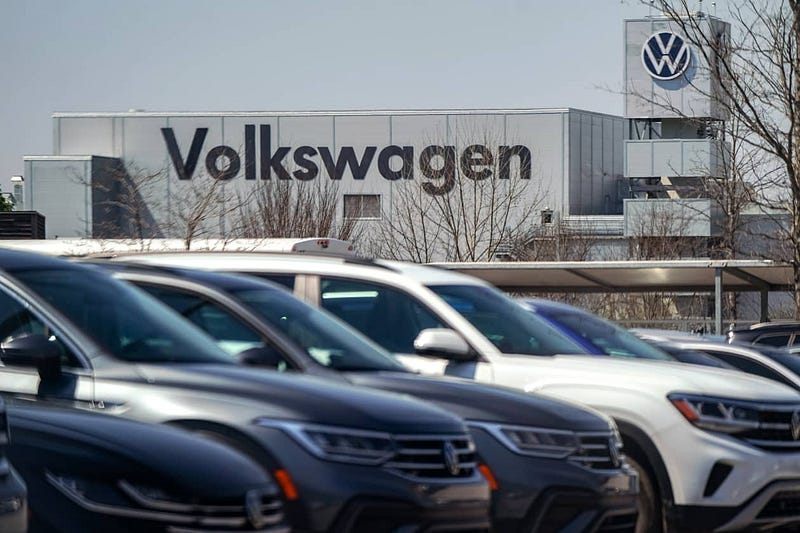
There are 3,000 employees on the street.
On September 25, it was Bosch’s turn. Remember, the automotive equipment supplier announced one of the decade’s largest social plans. 13,000 employees were laid off across Europe.
So it’s not just manufacturers that are in difficulty, it’s really the entire European automobile industry in its broadest scope. When it’s not layoffs or factory closures, it’s long periods of partial unemployment that follow one another.
This recently happened at the Stellantis factory in Poissy and the one in Sochaux (France), which I mentioned before. They were shut down for three weeks last month precisely to avoid overproducing because of weak demand.
So you can imagine, this explosive cocktail of an unfavorable market and a Chinese flood that’s only just beginning makes us fear the worst. It’s really worrying because, I remind you, their automotive sector in 2024 directly employed 13.8 million Europeans.
That’s enormous.
Why There’s No Way Out
So, now that we’ve said all that, the question we can legitimately ask is: do solutions still exist for our European manufacturers?
Can we still save them? Well, as you’ll see, it’s going to be pretty complicated.
One of the first solutions quickly considered was trying to restore maximum competitiveness to European electric vehicles by building our own battery manufacturer. The idea on paper was rather simple: build at a European scale a true rival to CATL, a true Airbus of batteries.
One of the first companies to launch into the sector and try to take on this challenge was Northvolt. Northvolt, a Swedish startup founded in 2015 by former Tesla executives, had a clear objective: produce lithium-ion batteries in large numbers on the continent.

For that, it raised tons of money, €13.6 billion, with investors like Volkswagen and Goldman Sachs. It also received many public subsidies totaling one billion euros.
So Northvolt was really the technological gem that many bet on, but it didn’t go as planned. And yes, if I’m speaking in the past tense, it’s not for nothing. Northvolt went bankrupt last March.
The other major European ambition in the battery field, the one we’ve heard a lot about in France in recent years, is obviously Verkor. Verkor, a Grenoble startup founded in 2020, is a bit like Northvolt’s little sister. It also raised a lot of money, over €2 billion cumulatively.
Its first Gigafactory is being finalized in Bourbourg, just next to Dunkirk. This Gigafactory must supply the Renault group with high-performance batteries starting in 2027, notably Alpine for its new 100% electric range.
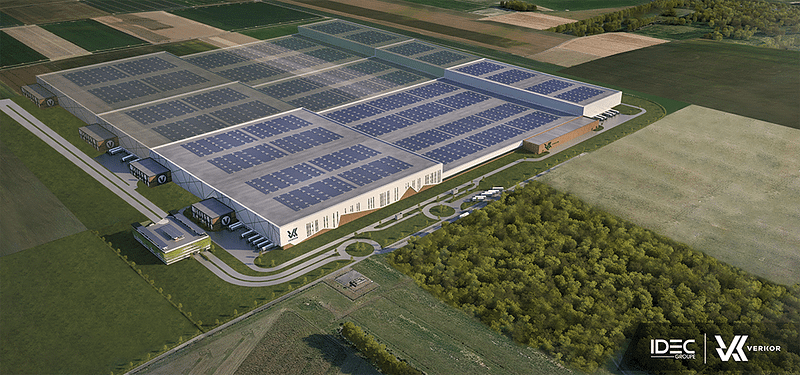
The start of ramp-up is planned for late 2026 at Verkor. So we hope it won’t turn into an industrial catastrophe like its big sister.
I’m sure many of you Europeans have already thought of this: if we’re not capable of competing, well, why wouldn’t we set aside our electric dreams by simply removing the 2035 ban and going back full throttle into combustion engines?
At first glance, it might seem like an exit for our manufacturers, but in reality, no, not at all. It would even be worse. And that for one simple reason: the combustion engine is already an object of the past.
Yes, if Europe backtracks on electric and returns to combustion, well, the world around Europe won’t stop turning. In Asia alone, for example, electric adoption will continue to increase. Xi Jinping announced that in 2040, 100% of new vehicles sold in China will be electric.
So by 2050, 10 years later, the entire Chinese fleet will be almost entirely electrified. If Europeans stay with combustion, they’ll therefore no longer sell anything in China from 2040 onward. And as we’ve seen, that’s completely inconceivable for them, given their extreme dependence on this market.
So, returning to combustion is absolutely not a future solution. Especially since electricity is expected to make enormous progress. Yes, it’s only been 15 years that engineers worldwide have been working on electric vehicles and batteries. That’s really not much when you put it into perspective.
Enormous progress is therefore to be expected in the sector, and it’s already arriving. BYD recently presented its flash batteries that can recover 400 km of range in just 5 minutes. So we’re literally talking about a system where recharging your car will soon take the same time or even less than filling up with gas.
Final Thoughts
Since Pandora’s box was opened with BYD’s arrival in Hungary, European manufacturers reacted and allied with BYD’s competitors. That’s exactly what Stellantis did with Leapmotor.
Stellantis recently opened its European factories to the Chinese manufacturer so that it could assemble its models designed in China on the territory. For now, these are win-win alliances. Leapmotor runs Stellantis production lines that would otherwise be stopped for lack of demand. And in return, Stellantis handles distributing Leapmotor vehicles through its very large dealership network across Europe, in Citroën dealerships, in Peugeot dealerships, in Fiat dealerships.
For Chinese manufacturers, it’s very advantageous because it allows them to arrive smoothly on the continent. Yes, Chinese vehicles still suffer a bit from an image deficit because of the past. So, finding them at your favorite dealership, where you’ve been going for 20 years to buy your 208 and 3008, where you know the salesperson well, that strongly reassures potential customers and therefore contributes to higher adoption.
It’s not just Stellantis making alliances. Renault is also doing it with Geely right now. There’s also a lot of talk about a rapprochement between Volkswagen and XPeng, even if, on paper, there’s still nothing signed.
These alliances raise questions. Today, they’re presented to us as strategic partnerships, mutually beneficial cooperations. But year after year, Chinese manufacturers will continue to grow, perfect their technology, and further reduce their costs, while European manufacturers will do the complete opposite.
These alliances will, whatever happens, become less and less balanced over time. Each year, the Chinese will gain more and more negotiating power, and that’s the gigantic risk.
There probably won’t be a big, spectacular crash or an overnight bankruptcy. No, it will be much more discreet, much more progressive. A long series of necessary compromises for Europeans, shared platforms, reused software, grafted batteries, until the day when the essential critical know-how is no longer found in Europe but in China.
At that moment, Chinese manufacturers will reproduce exactly the model that was imposed on them in the 1990s: let us assemble their vehicles in our factories, but of course never give us access to the slightest critical technology.