
I bought Meta’s Ray-Ban Smart Glasses. Here’s Why Apple Should Be Embarrassed.
Apple fumbles with a $3,500 Vision Pro nobody wants. Meta is winning a category Apple should own, and it’s genuinely frustrating.

Let me be clear from the start: I’m not a Mark Zuckerberg fan.
I’m not a Meta admirer.
Facebook and everything surrounding it doesn’t excite me. But despite all that, I have to admit something that pains me to say: Meta is making the best smart glasses on the market, and they’re absolutely demolishing Apple in this space.
I tested the Meta Ray-Ban smart glasses last summer when I went back home to visit my parents, and I need to tell you what they got right, what they got wrong, and why Apple’s complete absence from this category is becoming increasingly embarrassing.
What Meta Got Right With Ray-Ban Smart Glasses
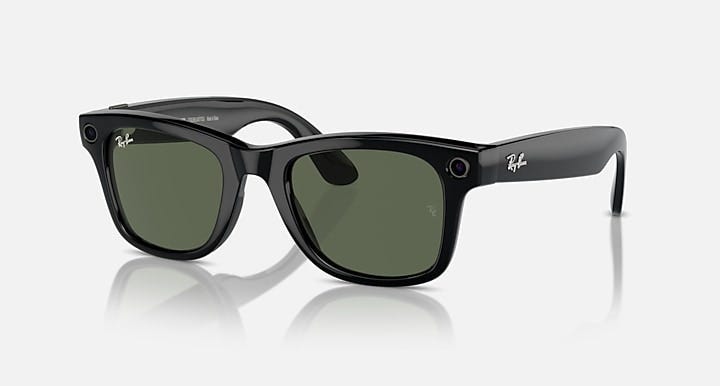
I purchased the Ray-Ban Meta glasses in transparent green with photochromic lenses that darken in sunlight. This means I can use them indoors or outdoors without being required to switch between regular glasses and sunglasses. I hesitated on this choice but ultimately decided on dynamic lenses because I thought it would be stupid to have smart glasses that only work as sunglasses.
The glasses themselves are genuinely impressive. What I absolutely loved was the audio system.
Instead of traditional earbuds, there are speakers built into the temples. When you listen to something, the sound emanates from the frames right near your ears, and you hear it incredibly well. The audio quality is excellent. It’s genuinely pleasant.
You can get them with prescription lenses, though I bought mine without, since I was just testing. If I end up loving them long term, I could add my prescription later. The thickness doesn’t bother me much; they have a sort of designer dad aesthetic that actually works.
The price felt reasonable at around €250–300. Consider that Ray-Bans are expensive, sunglasses are pricey, and photochromic sunglasses are even more expensive, and then you’re adding the technology—speakers built into the temples, cameras, and processing power.
For everything you’re getting, the asset makes sense.
I bought them specifically for summer use, and the audio experience is transformative. You’re outside, scrolling through Instagram stories, and the audio plays softly from your glasses. You can still hear your environment, and you don’t need to put in earbuds. It’s so pleasant that you get spoiled.
When I wasn’t wearing them, I’d catch myself thinking, “Damn, why isn’t my iPhone playing audio through my glasses?”
For filming, I took them on vacation, and honestly, it’s fantastic. Quick photo of the cat, brief video clip—I love it. It’s incredibly convenient. You retrieve the video on your phone in seconds. Their actual Ray-Bans are a huge marketing win because I’m already a fan.
The AI features aren’t great when you use the “Hey Meta” voice commands—that part feels half-baked. But I genuinely appreciate the photo-taking capability and having AirPods integrated into glasses. In fact, constantly having AirPods in gets tiring, and having audio glasses where you can still hear people around you is refreshing.
The Massive Problems Meta Won’t Talk About
Here’s the negative: you’re trapped in Meta’s ecosystem. That’s it.
You can only connect these glasses to Instagram, WhatsApp, and Facebook. That’s all.
The only workaround for doing a Twitch stream would be to call yourself on WhatsApp and put that video on your stream. But there’s another defect: the glasses film in vertical 3K resolution. That means you get a vertical video. If you want horizontal video, you have to crop it. They don’t have a square sensor.
For Instagram stories, this is perfect. You’re like, “Yo, everyone, we’re alive again, talking about Ray-Ban Meta glasses. Look.” That’s great for stories. But I bought them hoping to do some vlogging. You film while biking; you film whatever, however, it only films vertically.
Lena Situations used them in her vlogs, and if you look closely, she’s cropping into the footage. It’s not ideal, but it works in a vlog context. The stabilization is built in, which is impressive.
I posted vacation videos filmed on my personal IG with the glasses—truly action camera quality.
My overall take on Meta’s connected glasses: they’re relatively limited because you’re forced into Meta apps. I don’t particularly like Meta apps except Instagram for work, obviously, but in my personal life, not really.
I’m waiting for a neutral brand to offer connected glasses that work with smartphones, computers, and smartwatches, and can connect to any video system—not just Meta apps. Glasses with a square sensor, like newer iPhones, that allow shooting vertical or horizontal video agnostically. That would be the best action camera in the world.
Do I want Apple Glasses? It depends. I’m honestly not sure. But the fact that Meta is leading this category while Apple fumbles with the Vision Pro is genuinely frustrating.
Last summer, Meta announced glasses that make Apple look foolish.
Last summer, Mark Zuckerberg and Meta announced a new version of these glasses that delivers a slap to Apple, Google, Microsoft, and Samsung. Meta presented the Ray-Ban Meta Display glasses, which don’t yet replace smartphones but allow you to use your phone less and less.
Compared to what I just showed you, they’ve added display capability in the lenses. I tested Google Glass a very long time ago, and it was extremely uncomfortable. The second version has an interface displayed in the lenses.
My first reaction: I find them much too thick.
The current model is already fairly thick, and these are even thicker. Plus, I’m not genuinely interested in the display feature. I prefer the audio plus photography aspect.
Mark Zuckerberg is convinced that eventually smartphones will be replaced by augmented reality glasses. That’s why Meta spends billions of dollars each year developing mixed reality technology. The Ray-Ban Meta Display glasses they presented a few months ago won’t let us get rid of smartphones yet, but they’re another step toward realizing that vision.
This product, which is arriving in Europe in 2026, has a screen that allows you to text without using your smartphone, make video calls, get translations, and interact with Meta’s AI.
Why This Should Have Been Apple’s Product
Honestly, I’m disappointed it’s not Apple presenting this.
Why is Meta releasing this? It’s frustrating. I wanted Apple, the creator of software and hardware, to offer this. I’m genuinely disappointed it’s not Apple.
You’ve seen the image about how to create a car: it’s better to create a skateboard, then a scooter, then a bike, then a car. Instead of creating one car wheel, four car wheels, a car seat, and a car. Apple, with the Vision Pro, answered a need that didn’t exist with constraints nobody cares about, so it won’t be adopted.
Meanwhile, Meta says, “Look, with these glasses you can film.” That’s it for year one.
“Oh, now the glasses have audio, and you can talk to AI.” Year two.
“Now we’re adding notifications.” Year three.
“Now you can see everything.”
The Vision Pro serves no purpose except as a demonstration, whereas a small pair of glasses that films, a pair you can discuss with AI, and a pair that shows notifications are an iterative product strategy that actually makes sense.
The Display Glasses: Revolutionary or Another Meta Failure?
Meta offers a navigation system allowing you to use these glasses for cycling directions. Perfect. The glasses come with an EMG bracelet that lets you control the interface using subtle, discreet hand gestures.
Obviously, this won’t be perfect initially, but these are steps forward.
Thanks to these future glasses, you should increasingly not need to touch your smartphone screen. Why not? And this is just the beginning, since Meta continues working on its Orion project, true augmented reality glasses that could actually replace smartphones.
By launching the Ray-Ban Meta Display, Mark Zuckerberg demonstrated he’s ahead of his competitors. And yes, unfortunately, I’m quite disappointed about that. Meta just ridiculed Apple with a new product, and it’s crazy.
Mark Zuckerberg presented futuristic glasses, the Meta Ray-Ban Display, somewhat inspired by the Orion we’d already seen. What makes these glasses revolutionary? They have a screen in the lenses. How does Meta do this? Small Pico projectors in the temple project an image onto the right eye lens.
This technology allows them to keep the glasses relatively compact.
They’re larger than other Meta Ray-Bans, but they’re still glasses. You can wear them effortlessly on the street without looking ridiculous.
How do they work? A bracelet accompanies the glasses, allowing you to control the screen with finger gestures. You can switch between applications, respond to messages, launch navigation, and so on.
The White-on-White Interface Problem Strikes Again
But wait.
Are they doing like Apple, putting white on white? Calm down, because it works here since the ground is black, but I’d like to see it in full sunlight.
You see what I mean? They gave us white icons on white backgrounds again. I understand here because you shouldn’t block the view of what happens in bright sunlight.
The Meta Ray-Ban Display is the futuristic glasses everyone was waiting for. We didn’t expect Meta to release them now, and especially, they’re arriving rapidly in Europe. They’ll launch in early 2026 for €799.
I won’t buy them because they are too expensive. But I’d really like to test them to see what the interface looks like. Between a PS5 and Meta Ray-Bans, honestly, I’d prefer the Meta Ray-Bans personally, but I’m not spending my money on them.
Whether Apple likes it or not, the future is smart glasses.
Do you think in 5 to 10 years everyone will walk around with glasses and talk alone on the street? Yes, I think “talking alone on the street” doesn’t mean anything because today it’s already the case with AirPods. You can say something, but you don’t do it nonstop. But you can drop a quick word, yes or no, or click something.
The Meta Ray-Ban Generation 2 costs €449. I didn’t pay that much. Oh, I bought Generation 1. That’s why.
The Gen 2 came out in September. Mine aren’t 3K because they’re HD. So the resolution is genuinely very low.
Looking at Meta’s presentation, you put on your glasses, send messages using voice, and make video calls where you show what you see while the other person is in their house. Real-time translation. The progress is literally under your eyes.
The presentation had bugs, but you get the concept.
The gesture bracelet for writing messages with your finger in the air feels styled, honestly. But I’m disappointed it’s not Apple that made this. We’re forced to go to Meta for this.
Apple, it was your turn to do this, even last year, honestly.
You have the Apple Watch for gestures already. You didn’t make glass. Just put cameras in them and add audio in the temples. That’s it.
My Honest Assessment After Using Them All Summer
We’re entering a world where Meta is competing with Apple head-to-head, and in this category, Meta is winning decisively. Sony exists, too.
It disappoints me somewhat, but that’s the reality, and that’s also why I have this product, because I found it very cool.
The Meta Ray-Ban smart glasses with audio and cameras are genuinely useful and well-executed despite the ecosystem limitations and vertical video frustration. The upcoming Display version pushes further into territory Apple should own but has completely abandoned in favor of a $3,500 headset nobody asked for.
I think in one or two years, many of us will have bought smart glasses.
The technology works, the price point is approaching reasonable, and the use cases are becoming clear. Apple needs to get in this game immediately, or they’ll grant an entire product category to Meta by the time they decide AR glasses matter.
Thanks for reading. I hope you enjoyed reading it. Subscribe for more content and to stay updated whenever I publish a new one. Take care.