

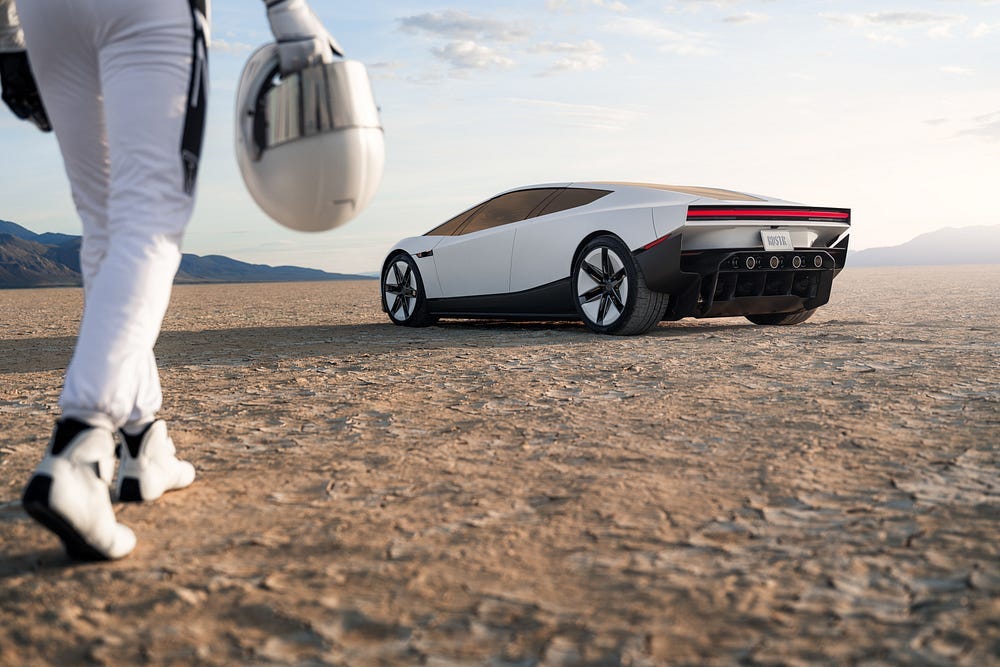
Tesla revealed the second-generation Roadster on October 15, 2026, on the penultimate day of the Mondial de l'Auto in Paris. I’ve been reporting on this company for a while, and while I’m not a Tesla devotee, I have to admit that what they revealed is genuinely bizarre and worth examining.
Let me walk you through it, including the part where the car drove upside-down.
Nine Years Is a Long Time to Wait
The original Roadster concept was unveiled in 2017. Deliveries were promised for 2020. Then 2021. Then 2022. It kept moving, year by year, until we all quietly stopped expecting it. What Tesla showed at the Paris Motor Show this week is the result of that wait, and they clearly understood that after nine years of broken promises, they needed to arrive with something that couldn’t be ignored.
They did.
What the Car Actually Looks Like
This design has changed substantially from the 2017 concept. The bodywork is tighter and more aggressive — the front end draws comparisons to the Lamborghini Reventón, which is not a bad reference point if you’re trying to signal that this is a serious performance machine. The 2017 version featured a unique smoothness.
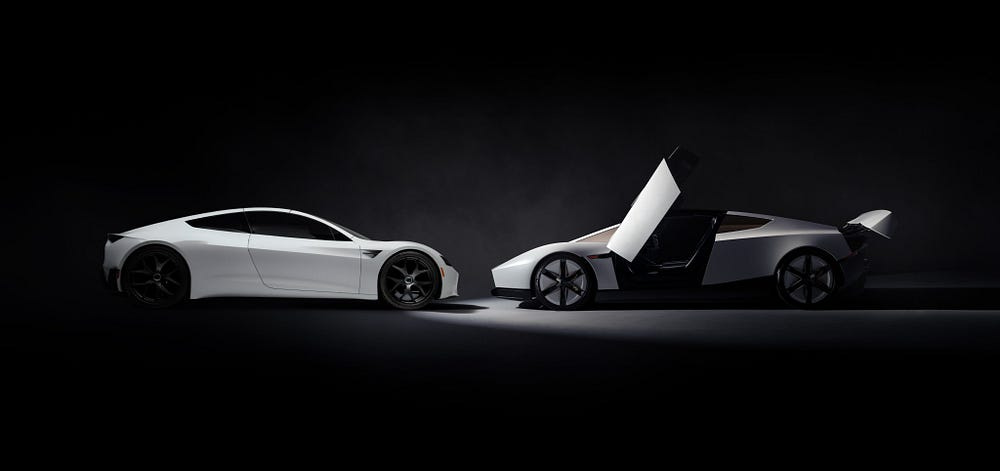
The other thing to know: despite the name, this Tesla Roadster has a fixed roof. It is technically not a roadster by any traditional automotive definition. A roadster is an open-top two-seater. What Tesla built is a hardtop coupe with two seats. Whether that matters to you depends on how seriously you take nomenclature, but it’s worth stating plainly because Tesla is leaning hard on the legacy of the name while building something that doesn’t physically match it.
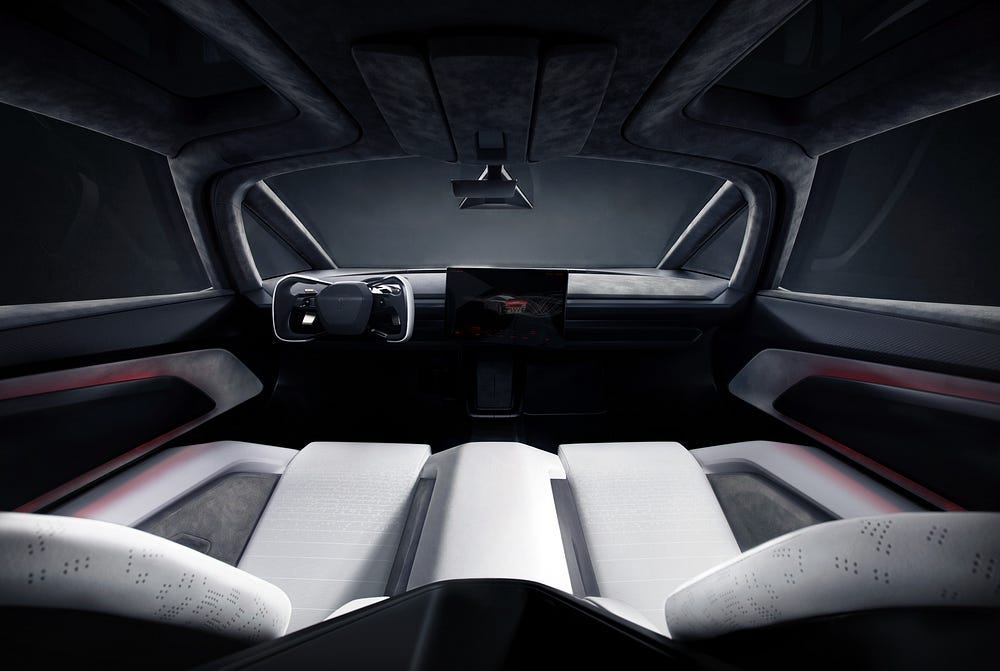
It is also a strict two-seater. The 2017 concept had a small rear bench. That’s gone.
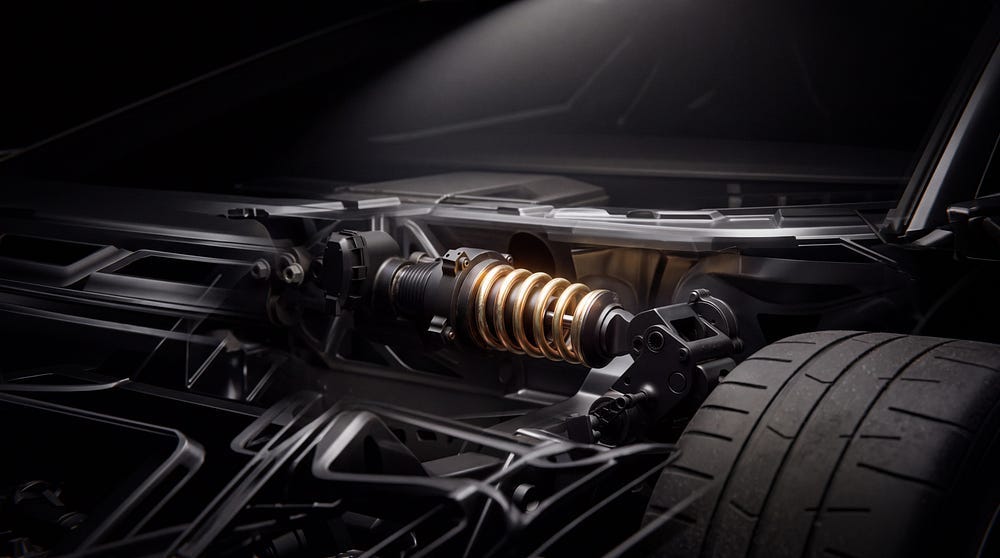
On the engineering side: carbon fiber chassis with magnesium and titanium in the structure, push-rod suspension, and a fan system mounted under the car. That last item is where things get interesting.
The Fan System and What It Actually Does
Under the floor of the Roadster, Tesla has installed a fan that generates downforce by sucking air and pulling the car toward the road surface. The result is active aerodynamic grip without the drag penalty of a traditional wing — at least in theory.

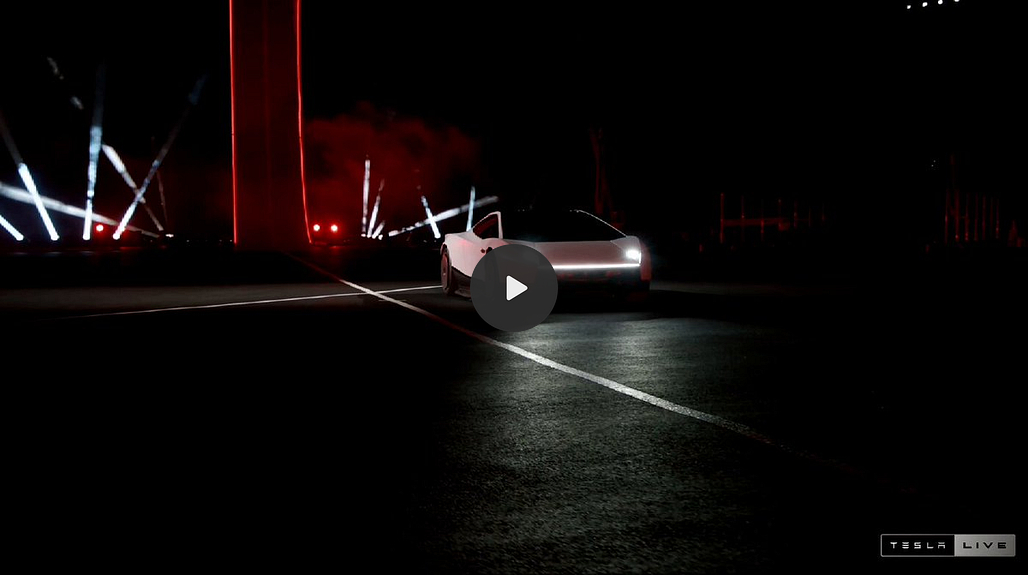
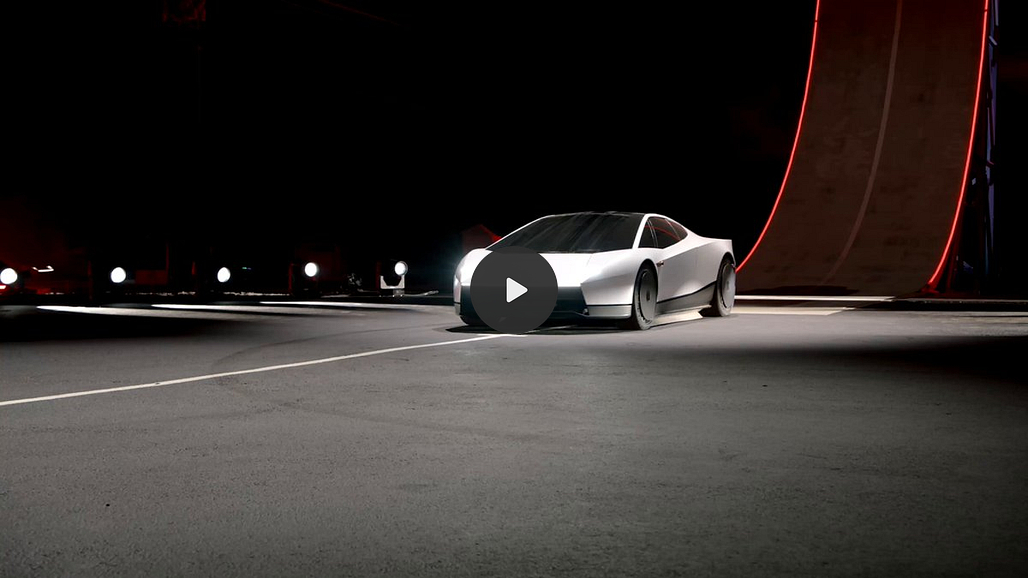
The demonstration at the reveal event was not theoretical. A Tesla Roadster drove to the top of a looping track structure, went inverted, came to a complete stop at 0 km/h, and stayed fixed to the ceiling of the loop. The car held its position upside-down at rest.
I’ve seen a lot of car reveals. I have not seen that before.
Tesla claims this system can generate up to 2G of lateral force in corners. That would give the Roadster a cornering capability unmatched by any production car. Whether the production version delivers that is a different question — but the live demonstration of the ceiling adhesion was real, not a render.
Three Versions, One of Which Can Fly
Tesla is offering the Roadster in three configurations.
Roadster Performance is the baseline. Two seats, active aerodynamics, the suction fan system, 0–100 km/h in 1.6 seconds. That is already faster than nearly anything available for purchase.
Roadster Thrust is where the SpaceX technology enters. The car has cold-gas thrusters mounted at the rear — the same category of propulsion technology used in spacecraft attitude control, developed through SpaceX. These thrusters generate thrust independently of the wheels. The 0–100 was measured live, in front of the audience, with a stopwatch: 0.9 seconds. Not a claimed figure. A timed run at the event.
Roadster Rocket is something else entirely.
Ten thrusters positioned around the bodywork, approximately 600 litres of compressed air stored at high pressure. The car can generate enough thrust to lift off the ground — not in a straight line, but with directional control, including the ability to hover and move laterally like a helicopter. Tesla claims 0–100 in under 0.6 seconds and a top speed that could exceed 370 km/h. This version seats one.
The Roadster Rocket will not be road-legal. This is not a surprise. A car that can take off from a standing start, fly over traffic, and reach 370 km/h cannot realistically be operated on a public road. Tesla is building it anyway, apparently because they can.
The Last Human-Driven Tesla
Here is the part that matters beyond the spectacle.
During the presentation, Elon Musk announced that the Roadster will be the last Tesla model that a human can drive. Everything that follows will be autonomous. The Cybercab, which was also on display at Paris this week, is the template for what Tesla’s future vehicle lineup looks like: no steering wheel, no pedals, no driver.
Tesla is quietly exiting the business of making cars for people who want to drive. The Roadster is the ultimate statement in that category — a car built to be the definitive argument for human-controlled performance, precisely because it’s the last one.
Deliveries are scheduled for 2028. A two-year wait from Tesla is practically optimistic.
The Context: What Was Happening Around It
The reveal took place at the Mondial de l’Auto — one of the biggest automotive shows in the world — and the contrast with the rest of the event is worth naming.
On one side of the show floor: a car that sticks to ceilings, has SpaceX thrusters, and can take off. On the other hand, the European automotive industry’s answer to the affordable EV challenge amounts to something resembling an electrified Trabant — a small hatchback with approximately 200 km of range, promised in about two years, for around €15,000. The Citroën 2CV reference the speaker made was not accidental. That vehicle has become a cultural shorthand in France for a car that is humble, practical, and modest in ambition.
Both visions were present at the same motor show in the same week. They represent genuinely different answers to what cars should be like.
And separately, a few days before the Roadster reveal, new numbers surfaced on the Alpine A390 — Renault’s flagship electric sporting model. Of approximately 1,000 registrations worldwide since the beginning of the year, only around 230 had been sold to private buyers. Roughly 300 of the rest were dealer demonstration vehicles. The sales figure is considerably worse than the registration count already suggested.
The timing is not kind to European brands.
What the Roadster Actually Settles
Nothing. Not yet.
This Roadster is real in the sense that it was physically demonstrated. The ceiling adhesion happened. The 0.9-second run happened. This thruster demo was not CGI. But “demonstrated at a reveal event” and “available to purchase and drive” are different statements, and Tesla has a well-documented history of a gap between those two things.

The 2028 delivery target means two more years of production engineering on the thruster systems, the compressed air storage, the regulatory questions around road-legality for the various configurations, and whatever the actual production specifications end up being once the engineering constraints of manufacturing reassert themselves.
What is settled: Tesla still knows how to make a car reveal feel like a moment. In a show floor full of sensible electrification decisions, they showed up with a car that drove on the ceiling and another that could fly. That is a strategic choice, not just a publicity stunt — it is a statement about what kind of company they intend to be while the rest of the industry is focused on range figures and charging times.
Whether the Roadster Rocket ever lands on a road to you is a separate question from whether Tesla won the week in Paris.
They won the week in Paris.
If you’ve been following the Tesla autonomy transition and want to understand what the Roadster’s “last human-driven car” positioning means for the broader product roadmap — I covered that when the Optimus pivot made the direction undeniable: “Tesla Scrapped Two Car Models for Optimus. The $20,000 Price Won’t Hold.”

Follow Nov Tech on Medium for more coverage of the technology that’s actually reshaping the world — no hype, no recycled takes.