
Musk Just Announced a $25B Chip Factory That Nvidia’s CEO Says Is “Impossible.”
The Terrafab aims to produce 50x more AI computing power than the entire global industry. Jensen Huang says what TSMC does can’t be replicated. Who’s right?

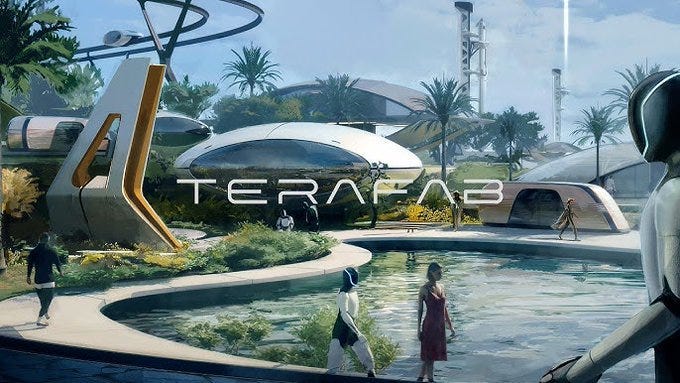
March 21st, 9 PM, Austin, Texas. Light beams pierce the sky above a decades-abandoned power plant. The Texas governor is in the room. Millions watch live on X. Elon Musk walks onstage and announces a $25 billion semiconductor factory capable of producing, by itself, 50 times more computing power than the entire global AI chip industry combined.
And Jensen Huang, the CEO of Nvidia and probably the person who knows the semiconductor supply chain better than anyone on Earth, has a coherent message about this.
He says what TSMC does is almost impossible to replicate.
So who’s right? Is Musk laying the foundations for the next industrial revolution, or are we watching Battery Day 2.0 with the same spectacular promises and the same disappointments to come?
What follows will give you all the keys to form your own opinion. And along the way, we’ll stop at two other events from this week that each clarify, in their own way, why this project might be much more than a communications stunt.
The Problem Nobody Talks About
To understand why this announcement is shaking Silicon Valley, you first need to grasp a problem most people completely ignore. Today, manufacturing an AI chip is an intercontinental logistics marathon. Design happens in California, etching in Taiwan, assembly in Malaysia, testing somewhere else entirely. Every border crossing costs weeks of delay. Every step is a potential point of failure. And in the race to artificial intelligence, a few weeks is actually an eternity.
Musk decided to short-circuit all of that. The Terrafab project, that’s the name, will bring together design, lithography, manufacturing, memory, advanced packaging, photomask production, and testing under one roof. Everything from start to finish. An integrated production loop that exists nowhere else in the world.
Musk himself summarized it this way:
To his knowledge, no place on Earth concentrates in the same building everything necessary to design, etch, package, test, and continuously improve a chip.
The stated objective? 1 terawatt of computing power per year.
To put that in perspective, current global AI chip production runs around 20 gigawatts. The Terrafab aims to multiply that by 50, all by itself.
And that’s where the story takes an unexpected turn. Because the most surprising part of the announcement isn’t the project’s scale. No, it’s the destination. Musk revealed that 80% of Terrafab’s production won’t stay on Earth. Four out of five chips will go into orbit to power a constellation of one million AI satellites.
His logic is impeccable on paper. Solar energy is five times more powerful in space. The cosmic vacuum offers easier, virtually unlimited cooling for data centers. And Starship, according to its own projections, will be capable of delivering up to 10 million tons into orbit per year.
The missing piece connecting all this? Computing.
The Terrafab isn’t just another chip production factory. It’s the cerebral infrastructure of an orbital civilization. Science fiction turned business plan.
The Scale Makes No Sense (Until It Does)
Except nobody anticipated what came next. When journalists asked where the Terrafab would be built, many thought the massive building visible in the presentation render, right next to the Texas Gigafactory, was the factory in question. But Musk corrected them on X. He said, “That building is just a small rapid prototyping lab. The real Terrafab won’t fit on the Gigafactory Texas campus.”
According to his own estimates, the final installation would cover approximately 9.3 million square meters. To visualize that, it’s 10 times the size of the Texas Gigafactory, 30 times Apple’s headquarters, and roughly equivalent to Vatican City, Monaco, or Gibraltar combined.
The exact location hasn’t been announced yet. There are many rumors going around, but I can’t be sure if it will happen here or elsewhere. We’re waiting for more information.
Now, the skepticism around this project isn’t a minor detail, and it would be dishonest not to talk about it seriously. Jensen Huang said it publicly during a TSMC event at the end of 2025. He said reproducing what TSMC does is extremely difficult. It’s not just building a building. It’s, quote, “the engineering, science, and art of decades of accumulated expertise.”
And Huang has every reason to want more production capacity in the world. NVIDIA is TSMC’s biggest customer. If even he says it’s almost impossible, that’s worth pausing on.
TSMC has invested tens of billions over decades to reach its current level. In Arizona alone, they’ve spent $165 billion over several years to build six factories, and they won’t reach the 2-nanometer node until 2029. The Terrafab targets this same 2-nanometer node. The comparison is brutal.
Tesla, for its part, has zero experience in semiconductor manufacturing. The company designs excellent chips, that’s true. The Autopilot chip is a genuine success. But designing and manufacturing are two radically different professions.
The Battery Day Precedent Everyone Remembers
And the most comparable precedent should make everyone cautious. In September 2020, Musk took the stage at Battery Day and promised a revolution in battery manufacturing with the 4680 cell. Tesla was supposed to reach 100 GWh of annual capacity by 2022, reduce costs by 56%, and use those savings to release a $25,000 vehicle.
Six years later, most of these promises haven’t been kept. The 100 GWh target for 2022 was missed by a considerable margin. And battery manufacturing is considerably simpler than etching transistors at 2 nanometers.
Morgan Stanley estimates that even in an optimistic scenario, Terrafab’s first chips wouldn’t come out before mid-2029. And Tesla’s chief technology officer confirmed that the estimated $20 to $25 billion isn’t yet integrated into the 2026 spending plan, which already exceeds $20 billion on its own.
But despite all this skepticism, there’s an argument that even the fiercest critics have trouble dismissing. Musk isn’t building the Terrafab on a whim. He’s building it out of mathematical necessity, simply.
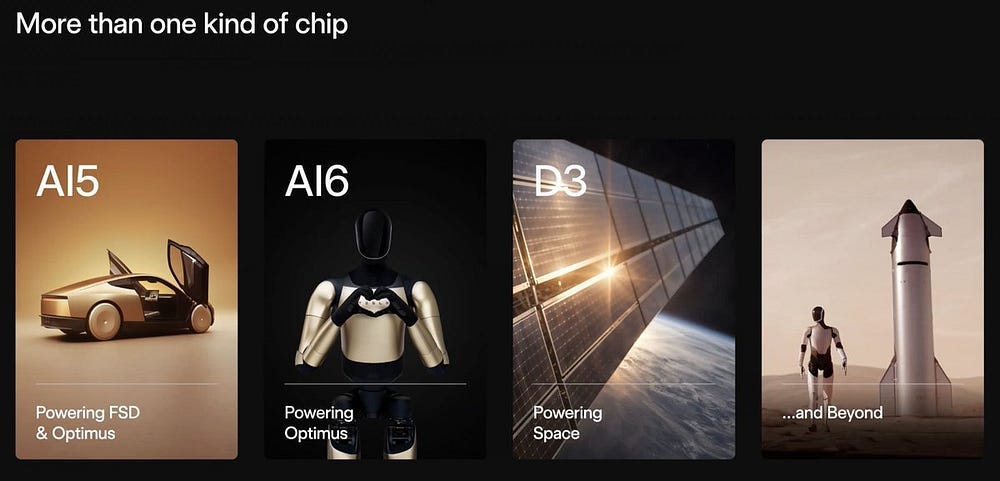
If Tesla actually produces billions of Optimus robots, millions of robotaxis, and if SpaceX deploys 1 million AI satellites in orbit, well, current foundries, even running at full capacity, even increasing their capacity, won’t be able to keep up. Musk said it himself, and the numbers are verifiable. Current global manufacturing capacity represents only 2% of what these projects will need.
His summary that evening was ruthlessly simple: either we build the Terrafab, or we don’t get the chips. And we need the chips. So we have no choice, we have to build the Terrafab.
The Pattern He’s Already Proven
And this is a pattern Musk has already played and won, by the way. In 2014, when he announced the first Gigafactory in the Nevada desert, Tesla had produced 300 cars per year, a single model, and the factory was sized to manufacture more batteries than the entire global industry combined. Observers talked about a “bridge to nowhere.”
What they hadn’t understood was that the Nevada Gigafactory had never been built for the Model S. It had been built for a car that didn’t exist yet: the Model 3. Infrastructure had to precede the product by several years. We know what happened next.
The bottleneck in 2014 was batteries. The bottleneck in 2026 is chips. But the Terrafab isn’t the only announcement that marked this week in Musk’s universe. What comes next will help you understand why everything is interconnected.
The Neuralink Proof of Concept Nobody Expected
I need to tell you about a man named John Noble. What this person publicly shared a few days ago didn’t make as much noise as the Terrafab. And yet, that’s a mistake because his testimony is perhaps the most concrete proof that this vision isn’t pure delirium.
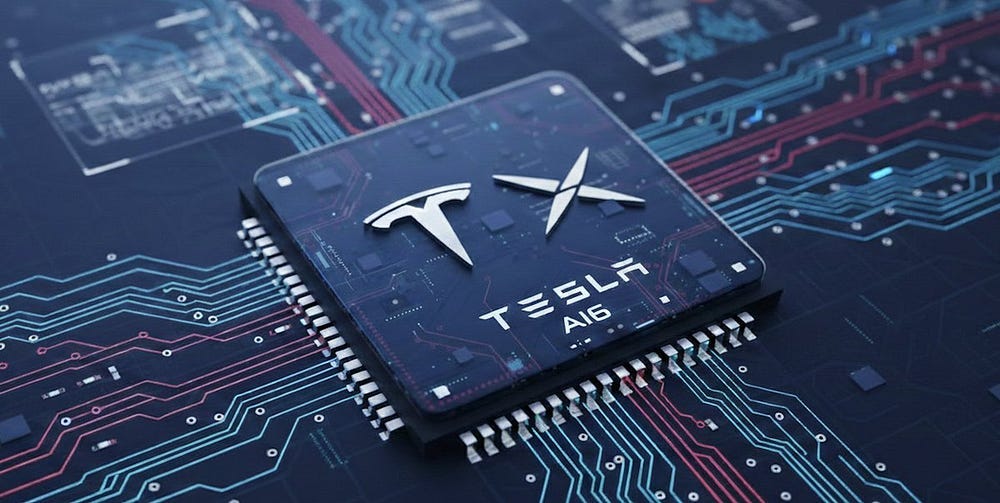
Noble is a former British Army paratrooper. After a traffic accident in 2016, he was paralyzed from the shoulders down. In December 2025, he received Neuralink’s N1 implant in London. 1,024 ultra-fine electrodes were inserted by a robotic system directly into his motor cortex.
Noble described the operation as surprisingly simple. General anesthesia, a small incision, that’s it. He went home the next day, and by day three, he already felt much better, according to what he says, and by day seven, the scar was starting to fade.
The real adventure begins in week two. The implant is connected to a MacBook. After a few minutes of calibration, Noble moves a cursor with his thoughts. He describes this first sensation as trying to remember a dream. The connection exists but remains blurry and vaporous. And then, in a few days, it crystallizes.
By week three, navigating his Mac, scrolling, clicking, typing, things we all do, all that had become second nature to him. He even jokes, “I went from complete Mac beginner to a power user in a few weeks.”
And on day 80, Noble decided to push the limits. He launched World of Warcraft. The first attempts were clumsy, then something shifted. His brain and the interface synchronized. He now explores Azeroth, attacks, moves, and manages spells solely through thought.
No keyboard, no mouse, and at full speed.
His conclusion after 100 days of use is the following. He tells us that the N1, Neuralink’s chip, didn’t just give him a new way to use a computer. It gave him a new way to live.
What makes this testimony important isn’t the video game. It’s what it represents in terms of proof of concept under actual conditions. Brain-computer interfaces have existed in laboratories for decades. What Neuralink is succeeding at is pulling them out of controlled environments and integrating them into daily life with a learning curve measured in weeks, not years.
And every chip that powers this implant, every satellite that will transmit this data, every Optimus robot that might one day assist bedridden patients, all of that requires computing power the world doesn’t yet produce. The Terrafab is the missing link.
The Tesla Semi Detail That Changes Everything
Yet something else was still to come. That same week, Jay Leno aired a 47-minute episode dedicated to the redesigned Tesla Semi, the last production version. Dan Priestley, the Semi program director, and Franz von Holzhausen, Tesla’s chief designer, presented the truck to Leno.
The figures are solid: 450 kg lighter than the previous version, 48V architecture, around 500 km of range, and 50% lower operating cost than diesel in California. A battery designed to last 1 million kilometers, and charging happens at 1.2 MW, capable of recovering 60% of range in just 30 minutes.
But the most revealing detail isn’t in any of these numbers. Priestley mentioned at the end of the show that Tesla is working on a fully automated charging system for the Semi. The driver enters a parking area, parks the truck on a conductive pad, and charging starts without human intervention. No cable, no plugging in.
The truck recovers 300 km of additional range while the driver takes their mandatory 30-minute regulatory break.
The break truckers are legally required to observe to prevent fatigue.
The truck refuels while the driver rests. Never the reverse.
And in a sector where driver fatigue is one of the leading causes of fatal accidents involving heavy trucks, this is as much a safety revolution as a logistics revolution. Priestley also confirmed that the test fleet has already exceeded 13.5 million kilometers with a 95% availability rate, and mass production targeting 50,000 units per year is about to start at the Nevada Gigafactory.
How the Pieces Actually Fit
I think you’ve seen it, but what connects these three stories (the Terrafab, Neuralink, and the Semi) is an overall vision that few people perceive when they look at each announcement in isolation. Musk isn’t building products. He’s building infrastructure for products that don’t exist yet.
The Terrafab’s chips will power the brains of Optimus robots, the sensors of autonomous Semis, next-generation brain implants, and the satellites that will connect everything from orbit. It’s a system where chips power AI, AI pilots robots and autonomous vehicles, and orbital infrastructure allows deploying intelligence at a scale our era is just beginning to conceive. A circular ecosystem where each piece depends on all the others.
And during the last minutes of the Terrafab presentation, Musk slipped in one more idea, and it’s perhaps the most dizzying. Reaching 1 TW of computing is just the first step. To go beyond, you’d need an electromagnetic launcher on the Moon, operated by Optimus robots, that would launch satellites directly into orbit without rockets, at the sole cost of electricity.
The final objective? The petawatt.
1,000 times the Terrafab. Numbers that still belong to science fiction. Science fiction has a bad habit of catching up to reality faster than we think lately.
Is this genius or megalomania? Let’s be honest, probably a bit of both. But what’s certain is that the tech and science world is going through a period where the most impossible projects are often the ones that redefine the rules.
And here’s what nobody’s saying out loud: if even 20% of this works, if the Terrafab produces even a fraction of what’s promised, if Neuralink scales beyond a handful of patients, if the Semi becomes the standard for electric freight, then we’re not watching a company pivot. We’re watching the infrastructure for the next century get assembled in real time.
The question isn’t whether Musk can do everything he says. The question is whether doing 30% of it changes everything anyway. And honestly? I think the answer is yes.
Thanks for reading. Sometimes I wonder if we’re in a transition period or just watching an entire industry figure out in real time that nobody actually knows what they’re doing. Let me know your thoughts in the comments.
Absolutely wild stuff. Hadn't heard John Noble's story, that is absolutely incredible how quickly we're moving!