

Three weeks ago, a Samsung engineer posted something on LinkedIn that he probably shouldn’t have. No announcement, no embargo breach notice, just a quiet technical observation about a chip he had helped prepare for manufacturing. A few hours later, the post was gone. The Korean press had already picked it up, and the information was out.
What James Kim, a principal engineer at Samsung Foundry with eighteen years at the company, had quietly disclosed was this: the Tesla AI5 chip had completed tapeout at Samsung and was scheduled to be manufactured at the Taylor, Texas facility on Samsung’s latest 2nm process. “It will soon be integrated into Tesla’s newest products,” he wrote, before the post disappeared.
To understand why that single deleted post matters — and why it connects to a plan considerably more ambitious than it first appears — you need to know what a tapeout actually is, and why this one is the second half of a story that started in April.
What a Tapeout Is, and Why There Are Two of Them
The word comes from an era when chip designers physically shipped their blueprints to factories on reels of magnetic tape. Everything is digital now, but the term survived. A tapeout is the moment a chip design is locked, finalized, and handed to the factory. Think of it as signing off the definitive architectural drawings of a building and handing them to the contractor. From that point forward, you build. You don’t redesign.
There are two tapeouts in the AI5 story, and confusing them has sent most reporting in the wrong direction.
In April 2026, Elon Musk publicly celebrated the first Tesla’s design tapeout. The architecture was complete. The chip Tesla had conceived was fully specified. He posted a photograph of the packaged silicon on X — a large primary die flanked by twelve SK Hynix memory modules — and confirmed the chip delivers approximately 5 times the useful compute of the dual AI4 setup currently in Tesla vehicles, with roughly 8 times the raw processing power, 9 times the memory at around 144GB, and 5 times the bandwidth.


What James Kim confirmed on July 11 is the second tapeout: Samsung’s foundry tapeout. Before a semiconductor plant can fabricate a chip, it must adapt the customer’s design to its own process, its own machines, its own constraints. That adaptation is complete. Samsung’s Taylor factory is ready to produce AI5. The design tapeout said, “the chip is designed.” The foundry tapeout says, “The factory is ready.” Both had to happen. Now both have.
The Node We Never Predicted
The specific revelation in Kim’s post — the part that surprised the entire semiconductor industry — was the process node.
This working assumption until July 11 was that Samsung’s 2nm Gate-All-Around line was being reserved for AI6, Tesla’s next chip generation, while AI5 would be built on more mature process nodes. Gate-All-Around is a transistor architecture in which the gate wraps around the conducting channel on all four sides rather than three. The result is less current leakage and meaningfully better energy efficiency per computation, which matters enormously in a device running on battery power.
Kim’s post demolished that assumption. AI5 is going straight onto Samsung’s most advanced node. The industry interpretation was immediate: Samsung’s 2nm yields have crossed the threshold where the process is viable at production volume. Yield, in semiconductor manufacturing, is the percentage of chips coming off a production line that actually work. Getting it above 60 percent on a new process node is roughly where mass production becomes economically rational. Tesla is committing AI5 to that node is the strongest public signal yet that Samsung’s 2nm is no longer in the experimental phase.
Why a Robot Needs a More Powerful Chip Than a Car
This is where the article becomes counterintuitive, and the answer is worth thinking through carefully.
Tesla designed AI4 for vehicles. Musk has said more than once that AI4 already has sufficient computing power to make autonomous driving safer than human driving. The Cybercab robotaxi, currently operating commercially in Texas and Miami, launched on AI4 hardware. If that chip is already enough for unsupervised driving, why spend billions on AI5?
Because a robot operating in an unstructured environment is a harder computing problem than a car operating on a road.
A vehicle moves through a codified space. Roads have lanes, traffic lights, and rules that the vast majority of road users follow the vast majority of the time. A humanoid robot in an Optimus deployment will face your kitchen tomorrow after your factory floor today and a warehouse loading dock the day after that. It picks up objects of variable weight and fragility. It navigates around people moving unpredictably. This adapts to situations that nobody in Fremont anticipated when writing the training data. The volume of computation required to manage that open-ended complexity is substantially higher than what highway driving demands.
But here is the core engineering tension: more computation requires more energy, and Optimus carries its own power supply. The 2.3 kWh lithium-ion battery pack integrated into the robot’s torso uses the same cell chemistry as Tesla’s vehicles. A Model Y carries roughly 75 kWh. Optimus carries about 1/32nd of that. Every watt the chip draws is a watt the motors cannot use. If the processor consumed 500W or more at full load, you would have an extremely intelligent robot that needed recharging before lunch.
Tesla’s answer was architectural surgery. The company stripped out everything the chip didn’t need for its actual job. Most processors carry a graphics processing unit, necessary when a device needs to render visuals, play games, or display an interface. Optimus needs none of that. After the GPU block was taken out, the image signal processor was also removed. The freed silicon was reallocated entirely to AI inference hardware. Every transistor on AI5 exists to run Tesla’s AI workloads and nothing else.
The result: AI5 has been optimized to run at approximately 250W, less than half the draw that would have made the battery problem unsolvable. At 250W average draw from a 2.3 kWh pack, Optimus can sustain a full eight-hour work shift on a single charge. That is the difference between a laboratory robot and an industrial product.
The Dual-Foundry Strategy
Tesla is not manufacturing AI5 at Samsung alone. The chip will be produced simultaneously at both Samsung and TSMC, the two largest pure-play semiconductor foundries in the world, in slightly different variants adapted to each factory’s process. Tesla’s software will run identically on both.
This is deliberate risk management. If one fab’s yields stumble, if a natural disaster disrupts production, if geopolitical friction between China and Taiwan accelerates — Tesla’s most critical chip program has a functional backup. The arrangement sits inside the $16.5 billion contract Tesla signed with Samsung in July 2025, which also assigns Samsung full responsibility for the subsequent AI6 generation.
TSMC, for its part, will manufacture AI6.5. Two of the world’s most capable semiconductor manufacturers are now building Tesla’s chip roadmap in parallel.
The Factory That Proves the Calendar Is Real
On July 10, Tesla published a video it titled “End of an Era.” The footage shows construction equipment arriving at the Fremont, California factory — the facility that produced the original Tesla Roadster and then the Model S for fourteen years. Excavators tearing up concrete trenches. Robotic arms being dismantled and hauled away. Conveyor systems from the Model S and Model X assembly line being removed piece by piece. The entire process took 46 days.
Forty-six days to dismantle a production line that ran continuously for fourteen years. The floor space now being converted will produce Optimus robots, with a target capacity of one million units per year from that single site. A second line at Giga Texas is designed for 10 million per year.
Musk has been transparent about the near-term constraints. Optimus has approximately 10,000 unique parts. The global supply chain for humanoid robots doesn’t really exist yet — Tesla will have to build it alongside the product. Initial production volumes will be, in his words, quite slow. Engineering samples of AI5 are expected by the end of 2026. Volume production at the foundry level is not realistically expected before mid-2027. The Cybercab, already operating commercially, runs on AI4. Consumer sales of Optimus are targeted for 2027 at the earliest.
Musk said in January 2026 that resolving AI5 was an existential priority for Tesla, and that he spent every Saturday for several months working directly on the chip architecture with the engineering team. Whatever one thinks of Musk’s public persona, betting against his stated technical priorities has consistently proven expensive. The Falcon 9 was dismissed while the Cybertruck was dismissed. The dry electrode battery process was called impossible. All of them happened, usually late, rarely on the original timeline, but they happened.
What the Roadmap Beyond AI5 Looks Like
AI5 is one step in a progression that Tesla has been explicit about.
AI4 currently powers all Tesla vehicles and the Cybercab. AI5 goes to Optimus and internal supercomputer clusters first, then progressively to next-generation vehicles. AI6 is the chip Samsung is building for the generation after that, with TSMC handling AI6.5. And then there is AI7 — which is where Musk’s stated long-term vision takes an unexpected turn.

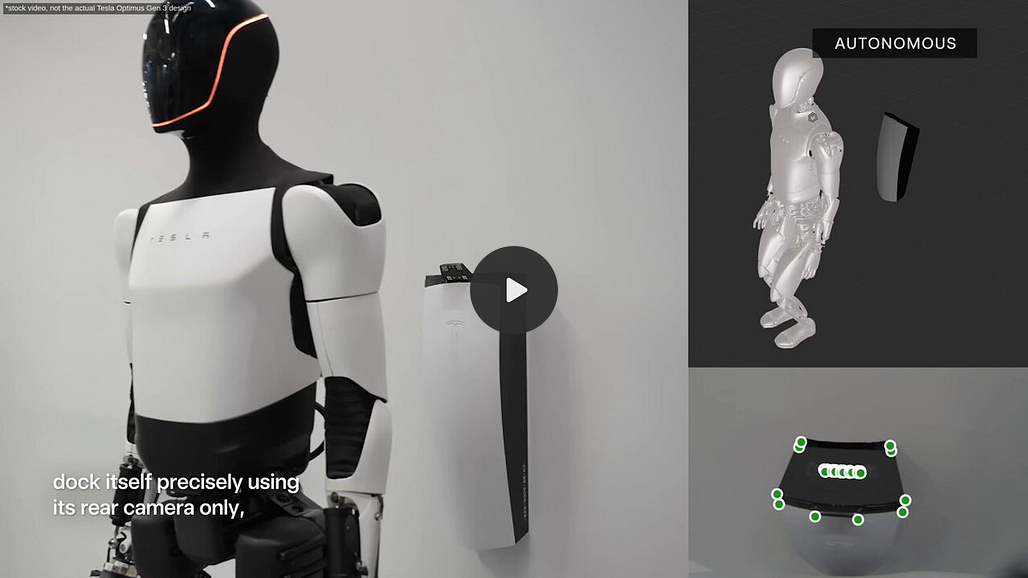
The plan for AI7, as Musk has described it, is to embed Tesla’s AI hardware in satellites, where solar energy is effectively unlimited, and the computational constraints of battery-powered operation disappear. This connects directly to what SpaceX and Starcloud are already building: orbital data centers, AI inference running above the atmosphere on continuously solar-powered hardware. The company that manufactures the chip, the company that launches the rocket, and the company building the orbital infrastructure are, increasingly, the same constellation of entities.
To support this roadmap at scale, Tesla, SpaceX, xAI, and Intel are jointly constructing Terafab in Austin, Texas — a semiconductor fabrication complex targeting 1 terawatt of AI compute output per year with a budget in the range of $20 to $25 billion. The global semiconductor industry currently cannot produce anywhere near the volume of AI chips Tesla’s projected needs would require. Terafab is the attempt to close that gap internally.
The iPhone Moment
The iPhone did not change the world the day Apple filed a patent on the capacitive touchscreen. It changed the world the day Foxconn figured out how to produce millions of them in Shenzhen. The technology existed before the industrial scaling. The transformation happened when the two converged.
That is where humanoid robotics is right now. The chip is designed, and the prototype silicon exists with a Samsung marking from the 13th week of 2026, indicating engineering runs were already happening in Korea months before the Texas fab came online. The factory in Fremont just had fourteen years of history torn out of it in forty-six days to make room. Samsung’s foundry has completed its tapeout. The timelines are tight, the supply chain is largely still being invented, and Musk’s announced schedules have a well-documented relationship with the calendar.
But the two parallel industrial processes — one in Texas preparing the chip, one in California preparing the factory — are now pointed at the same product, on overlapping timelines, funded by a company that has done this kind of convergence before.
The AI that has been living in software and in the cloud is moving into silicon, factories, and a robot that will eventually be in your home. Whether that takes two years or five, the direction is settled. The question is only how quickly the industrial infrastructure can catch up with the design.
Thanks for reading. Let me know your thoughts in the comments. Don’t forget to follow us and subscribe for more analysis. If you like space and physics innovations, follow The Nov Science for news related to science.