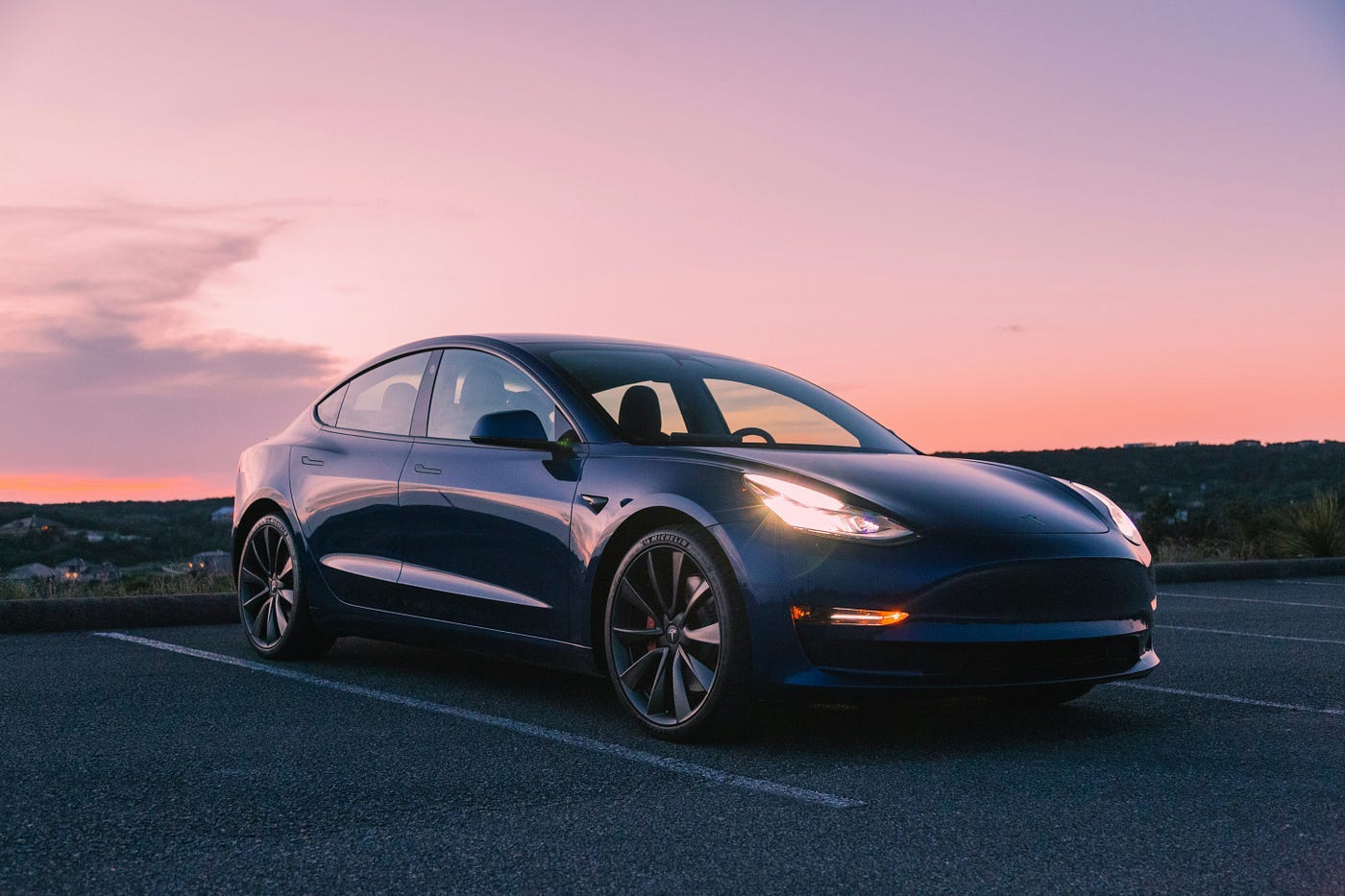
Tesla FSD Is Illegal in France. Why Europe Rejected Tesla FSD, and Only the Third Most Important Auto Story.
Three European Auto Decisions That Tell You Everything About Where the Industry Is Headed

The week that ended July 31, 2026, produced three separate decisions by three different organizations in three different countries, all of them aimed at the same underlying question: how much of the old automotive world survives what is happening right now? The answer, depending on which decision you look at, is complicated.
France told Tesla that its autonomous driving system is not legal in its current form. BMW confirmed that its combustion-powered 3 Series is getting a major generational update. To stay relevant in Europe, where it’s experiencing difficulties in the automotive market, Ford has announced the allocation of a section of its Spanish plant to a Chinese manufacturer. None of these stories sit comfortably next to the others. Together, they are probably the most honest picture available of where European mobility actually stands.
France and Europe Tell Tesla FSD It Needs to Try Harder
On July 22, French Transport Minister Philippe Tabarot released a video statement making clear that France would not authorize Tesla’s Full Self-Driving Supervised system in its current form on French roads. He framed it carefully: this was not a rejection of autonomous driving technology, and it was not a final answer. It was a refusal to approve the system as it currently stands.
Two specific objections drove the decision.
The first concerns speed. Tabarot stated that FSD can exceed posted speed limits by up to 50 percent without any driver command, adjusting its speed to match surrounding traffic flow. On a road marked 50 km/h, if surrounding drivers are traveling at 70 km/h, the system may independently choose to match them, prioritizing traffic harmonization over the posted limit. In France, that is a legal problem regardless of the practical logic behind it.
The second objection is harder to engineer around. The ministry’s findings reveal that FSD fails to guarantee that drivers remain attentive enough during high-stakes urban driving situations, including lane changes, intersections, and roundabouts. Under current French law, and under the EU framework Tesla is seeking authorization, the driver remains legally responsible for every action the vehicle takes, including actions the system initiates without being asked. The name “Full Self-Driving” implies a level of autonomy that the supervised version does not legally or technically possess in Europe. Tabarot made that explicit.
France’s decision makes it the first major European economy to state its specific objections through a cabinet-level announcement, rather than deferring indefinitely to the European Commission’s review process. The Netherlands has taken the opposite approach, choosing to authorize FSD under a national exception to the EU regulatory framework. That divergence within the EU is itself the story: two neighboring member states looking at the same system and reaching opposite conclusions within weeks of each other.
Tesla Doesn’t Need AI5 in Its Cars. It Needs It in Its Robots.
Three weeks ago, a Samsung engineer posted something on LinkedIn that he probably shouldn’t have. No announcement, no embargo breach notice, just a quiet technical observation about a chip he had helped prepare for manufacturing. A few hours later, the post was gone. The Korean press had already picked it up, and the inf…
Elon Musk responded to Tabarot’s statement publicly, arguing that regulatory caution on FSD costs lives by delaying a technology that is statistically safer than human driving in many conditions. That argument deserves to be taken seriously. It also does not change the legal framework France is operating under, where driver responsibility cannot currently be transferred to a system that the same government has declined to certify as autonomous.
The door is not closed. Tabarot confirmed that technical discussions are continuing between France, the Netherlands, other European states, and Tesla, and that this autumn he will convene the full French autonomous-vehicle ecosystem to define a national strategy and accelerate deployment. France has set a target of authorizing genuinely autonomous vehicles on public roads by 2027. FSD, in its supervised form, does not qualify as that. If Tesla corrects the two specific objections Tabarot named, the government has signaled it would revisit the question before that deadline.
BMW Confirms Petrol Isn’t Finished Yet
BMW, a few hundred kilometers away, was confirming a markedly different scenario: that the internal combustion engine retains a substantial production future within the company, with the forthcoming 3 Series generation serving as proof.
The new BMW 3 Series, codenamed G50, has been caught testing extensively over the past several months in prototype form, and the company has now confirmed the key details. The ICE version of the car is not disappearing in 2027 as some observers had speculated. It is arriving as a genuinely new generation, the biggest redesign the nameplate has seen since the E90 replaced the E46 over two decades ago.
There is a nuance worth understanding here. BMW is simultaneously developing two 3 Series at once: the electric i3, which rides on the all-new Neue Klasse architecture, and the combustion G50, which uses an updated version of the existing CLAR platform. The electric car gets a new foundation, and the petrol car gets Neue Klasse design language and technology applied to a refined, grown version of the current structure. The exterior appearance, interior layout, and digital infrastructure are the same for both. Under the skin, they sit on different engineering foundations.
This matters because it explains BMW’s commercial logic. Demand for combustion and hybrid variants of the 3 Series remains strong, particularly in Europe. Abandoning that customer base to invest solely in the electric version would cost BMW a significant portion of its most profitable market segment. The compromise is to give the ICE car a complete visual and technological refresh while keeping the engineering investment proportionate to what is essentially a platform evolution rather than a clean-sheet redesign.
What buyers will actually notice is the technology. The G50 brings the panoramic iDrive X display system, a wide screen projected at the base of the windshield that replaces the traditional instrument cluster and extends across most of its width. The M340i becomes the M350, with more power and the company’s first complete retirement of the “i” suffix from combustion model naming. This Touring estate version is confirmed for both ICE and electric variants.
The M3 story is where things get most interesting for performance enthusiasts. BMW M CEO Frank van Meel has confirmed the combustion M3 is coming, internally codenamed G84, riding on the CLAR platform with a mild-hybrid version of the S58 3.0-litre inline-six producing around 525 horsepower. An electric M3, codenamed ZA0, arrives separately on the Neue Klasse architecture. BMW is building both simultaneously, for the first time in the nameplate’s history. Rumors of a more exclusive combustion M3 variant with a larger displacement engine, potentially borrowing from the M5’s V8, remain unconfirmed but have been circulating in credible enthusiast circles for several months.
One piece of confirmed news: BMW has pulled out of the 2026 Paris Motor Show in October, citing a shift in financial priorities. The automaker no longer considers the event to offer a sufficient return on the investment required to present there. As a result, the official reveal of the new ICE 3 Series and M3 will probably wait until early 2027 rather than arriving at the show as many had expected.
Ford’s Pragmatic Retreat, and Geely’s Quiet Win
On July 23, Ford and Geely Auto jointly announced a new manufacturing partnership centered on Ford’s Valencia plant in Spain. The structure is a joint venture: Ford holds 66%, and Geely holds 34%. The factory, which has a nominal capacity of 500,000 vehicles per year, has been running at less than a fifth of that output. It currently assembles only the Ford Kuga after production of the Mondeo and Galaxy ended. Rationalizing an asset of that scale costs money and political capital. Sharing it costs less.
Under the terms of the agreement, Geely will produce two electric SUVs at the Valencia plant from 2028. A new multi-energy crossover is being jointly developed by Ford and Geely, with a planned arrival in 2028. Ford will additionally use the facility to produce a new European Bronco, a compact SUV built to European regulatory specifications, also targeting 2028. The Kuga continues.
The deal makes sense for Ford for reasons beyond factory utilization. Europe has become one of the company’s toughest markets in recent years, squeezed between Chinese brands offering competitive technology at lower cost and tightening emissions regulations that accelerate the timeline for electrification investment. Ford does not have the scale to absorb those costs alone in Europe. A partner who brings their own production volume to fill the factory, helps share engineering development costs on new models, and already has proven experience building competitive EVs changes the economics.
Geely’s strategic logic is equally clear, and possibly more interesting. The EU has imposed significant tariffs on electric vehicles manufactured in China. By producing in Spain instead, Geely’s models are built inside the EU and avoid those tariffs entirely. The company’s overseas sales grew 158% year-on-year in the first half of 2026. The partnership gives it a European manufacturing base without requiring it to build one from scratch. With its ownership of Volvo, Polestar, and Lotus, Geely is well-versed in the dynamics of the European premium market. Adding a Spanish production hub extends that understanding to the mainstream segment.
The broader implication is worth noting plainly. Ford’s European product lineup in the coming years will increasingly consist of vehicles developed in partnership with Renault or Geely, or badged with Ford’s name but engineered elsewhere. The new Fiesta will be built in France on Renault 5 underpinnings, while the new Valencia crossover will be co-developed with a Chinese company. The European Bronco is the one model that looks like a genuine Ford product in the traditional sense.
Most of what Ford sells in Europe by 2029 will carry the blue oval on top of someone else’s work.
That is not necessarily a bad outcome for Ford buyers in Europe. It may simply reflect the reality that building competitive vehicles for a market of this complexity, with this regulatory environment and these cost pressures, requires partnerships that would have seemed unthinkable a decade ago.
Three decisions, three different answers to the same underlying question. France is choosing caution over speed in autonomous systems, accepting the short-term frustration that comes with demanding more evidence before deploying technology on public roads. BMW is choosing continuity over clean breaks, finding a way to modernize the combustion car rather than abandoning customers who still want one. Ford is choosing survival over independence, partnering with a competitor rather than pretending the old model of national self-sufficiency still works at the scale of Europe demands.
None of these is the wrong answer. All three are navigating the same transition from other positions, with different constraints, toward the same uncertain destination.
Thanks for reading. Leave your opinions in the comments. Don’t forget to follow us and subscribe for more analysis. If you like space and physics innovations, follow The Nov Science for news related to science.


