The Apple Product I Want Most Is the One I’m Almost Sure Will Disappoint Me.
The Apple Ring makes perfect sense on paper. And Apple still hasn’t solved the one thing that would make it actually work.
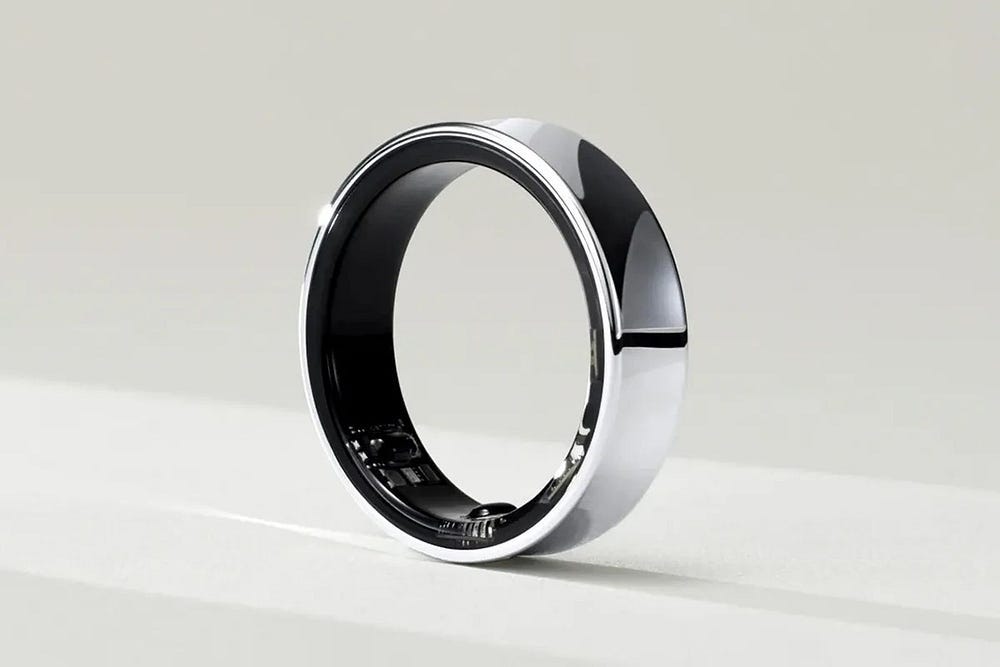
There’s one Apple product I’ve been waiting for that isn’t the touchscreen MacBook, isn’t the foldable iPhone, and isn’t whatever the next M-chip Mac turns out to be. It’s a ring. A small titanium ring that sits on your finger, tracks your health while you sleep, vibrates when something important happens, and lets you pay for coffee without reaching for your phone or turning your wrist.
I’ve wanted this for years. I’m also almost completely certain it’s going to let me down.
Not because Apple can’t build it. If there’s one thing the last decade has proven, it’s that Apple can miniaturize anything. The problem is somewhere else entirely, and the more I think about it, the more I realize it might be the single biggest gap in Apple’s entire product ecosystem.
But let’s start with why this product should exist at all.
Why a Ring Is Not Just a Watch Without a Screen?
The primary criticism I hear about the Apple Ring is, “Wouldn’t that be equivalent to an Apple Watch that offers fewer features?” No. And here’s why the difference matters more than you think.
Your finger is a better measurement point than your wrist. The blood vessels in your fingers sit closer to the skin’s surface, which means sensors can capture heart rate, blood oxygen saturation, and temperature variations with greater precision and less noise than wrist-based sensors. This isn’t marketing. It’s physiology. Companies like Oura and Ultra Human have built their entire product lines around this advantage, and the accuracy gains are measurable.
Then there’s the comfort factor, particularly at night. I’m one of those people who physically cannot fall asleep with a watch on my wrist. It’s psychological more than anything, but the sensation of a rigid band and display pressing against the mattress every time I shift my arm is enough to keep me aware of it.
I’ve worn the Ultrahuman Ring Air for months. I forget it’s there within thirty seconds of putting it on. And because I actually wear it to bed, I actually get sleep data. I didn’t use the sleep tracking feature on my Apple Watch, even though it was technically there.
There’s also something underappreciated about what a ring doesn’t have: a screen.
No notifications are pulling your eyes down every ninety seconds.
No reflex to light up the display to check what just buzzed.
A ring is a sensor that collects data and stays quiet. In a world where every device is designed to pull your attention, a wearable that deliberately refuses to is a genuinely different proposition.
What Apple Has Been Working On (And What It Hasn’t)
Apple has been researching smart ring technology for years. Patents dating back to at least 2019 describe a “wearable electronic ring computing device” with health sensors, haptic feedback, and gesture controls. In early 2024, Korea’s Electronic Times reported that Apple was accelerating development. And the rumored feature set is exactly what you’d expect from Apple entering a market that Oura and Samsung have already defined.
The reported specifications include health sensors for heart rate, blood oxygen, temperature, and sleep staging. A haptic motor so small it can deliver micro-vibrations directly to your finger, enough to wake you at the end of a sleep cycle without disturbing a partner, or to alert you to a specific notification without any screen, any sound, any interruption. NFC for Apple Pay, because paying by tapping your ring finger to a terminal is genuinely the lowest friction transaction imaginable. And gesture controls that could let you adjust AirPods volume or advance a presentation slide by rubbing your thumb along the ring’s surface.
On paper, this is the perfect companion device. It extends the ecosystem without duplicating it. It fills the gap the Apple Watch leaves at night. It adds health precision that the Watch cannot match. It’s exactly the kind of product Apple does better than anyone: entering a market late, studying every competitor’s weakness, and shipping something refined enough to make the rest of the industry look like prototypes.
And then Tim Cook paused the project.
Why Tim Cook Said No
In October 2024, Bloomberg’s Mark Gurman reported that Apple had no near-term plans to develop a smart ring. Apple’s industrial design team had pitched the concept to executives. The executives weren’t interested. Development never progressed past early exploration.
The reasoning was strategic, not technical. Under Cook’s leadership, Apple’s product philosophy had shifted toward something that was extremely profitable but increasingly conservative: take what exists, optimize it, recycle it across the product line, maximize margin. The M-series chips cascade from Mac to iPad. The next generation of iPhones uses chips that were once found in older iPhone Pro models as their standard. iPhone processors power iPads and even the Vision Pro. The supply chain is a masterpiece of component reuse.
The Apple Ring completely breaks that model. It requires miniaturization from scratch.
New manufacturing lines.
New sensor packaging.
A logistics challenge around ring sizing that no Apple product has ever faced (rings aren’t one-size-fits-all the way a Watch band is). And the finished product would sell for an estimated $299 to $349, a fraction of an Apple Watch Ultra’s price, to a market that is still a sliver of the smartwatch market. The entire smart ring market was valued at roughly $348 million in 2024, compared to $40 billion for smartwatches.
For Cook, the math was straightforward. Why invest billions in a new category with uncertain returns when you can boost an existing chip by 10%, add a new color, and guarantee record margins?
That logic made Apple the most valuable company on earth. It also made Apple predictable for the first time in its history.
Why John Ternus Changes the Equation?
Everything I wrote above was true under Tim Cook. Under John Ternus, the calculation shifts.
Ternus becomes CEO on September 1, 2026. He’s a mechanical engineer who joined Apple in 2001 and has spent 25 years building the physical products that define the brand. He led the Apple Silicon hardware transition, developed the 3D-printed titanium process for the Apple Watch Ultra, and championed the use of a recycled aluminum alloy in the MacBook Neo. If Cook was the CEO of optimization, Ternus is positioned to be the CEO of reinvention.
The Apple Ring is the perfect first project for a Ternus-era Apple. It’s a product that requires genuine engineering innovation, not chip recycling. It demands miniaturization at a level Apple hasn’t attempted since the original AirPods. This would show that the company remains capable of entering and defining a new product category, a feat achieved by the Apple Watch in 2015 and AirPods in 2016.
Gurman himself noted in early 2025 that while the ring remains “just an idea,” there are people inside Apple Park actively promoting the concept. With a new CEO who built his reputation on physical product innovation, those internal advocates suddenly have a much more receptive audience at the top of the organization.
Whether the ring actually gets a green light under Ternus is still speculation. But the conditions have never been more favorable.
The One Problem That Could Ruin Everything
Here’s where my excitement collides with something I’ve been frustrated about for years: Apple’s Health app is not good enough.
The Apple Watch is an extraordinary data collection machine. The heart rate, blood oxygen, ECG, respiratory rate, wrist temperature, and sleep stages are measured. This hardware is best-in-class. The sensors are surgical. The problem is what happens after the data is collected: almost nothing.
Apple collects your health data and stores it in a database on your iPhone. That’s it.
No recovery score.
No personalized training recommendations.
No sleep coaching that tells you what you did yesterday that hurt your sleep tonight.
No predictive insights about when you’re overtraining or under-recovering. The data sits there, waiting for you to stare at charts and draw your own conclusions.
Compare that to Garmin. A Garmin watch might not have Apple’s silicon horsepower, but its software does something Apple’s doesn’t: it interprets. It gives you a recovery time estimate and predicts race performances based on your fatigue level. It adapts training plans based on how your body responded to the last session. It’s a coach, not a clipboard.
The Ultrahuman Ring does something similar at a smaller scale. It doesn’t just count your steps, but it also analyzes your sleep and tells you concretely: you exercised too late, your body temperature was elevated, and your recovery was incomplete. It gives you actionable guidance that changes your behavior the next day.
For a smart ring, this interpretive layer isn’t optional. It’s the entire product. Without a screen to display notifications, without apps to browse, without a visible interface of any kind, the ring’s entire value proposition lives inside the companion app. If Apple launches a ring tomorrow without transforming the Health app into a genuine intelligent health coach, the ring becomes a beautifully engineered piece of titanium that collects data nobody reads.
This is the challenge John Ternus needs to solve before the ring ships, not after. Not in a software update six months later. Before. Because a ring without a smart app behind it is just jewelry with a battery.
What I Actually Think Will Happen
I think the Apple Ring ships in late 2027 or early 2028. Not this year, not alongside the iPhone 18, but in the next cycle after Ternus has had time to GreenLight the project and allow it to develop properly.
It will be built in titanium, offered in three or four sizes, and include health sensors that outperform every competing ring in accuracy. I think it will include NFC for Apple Pay and a haptic engine small enough to deliver meaningful silent alerts to your finger. I think it will cost between $299 and $399.
And I think the Health app will still not be ready when it launches, because Apple’s software teams and hardware teams have never operated at the same speed, and the health intelligence gap is a problem that has been accumulating for a decade.
I hope I’m wrong about that last part. Because if Apple ships the ring with the hardware it’s capable of building and the software it’s capable of writing, it won’t just compete with Oura and Samsung. It will make them irrelevant overnight.
That’s why this is the Apple product I want most. And the one I’m almost sure will disappoint me.
Thanks for reading. Follow me and subscribe for more content. You can also subscribe to my newsletter for early access.


