

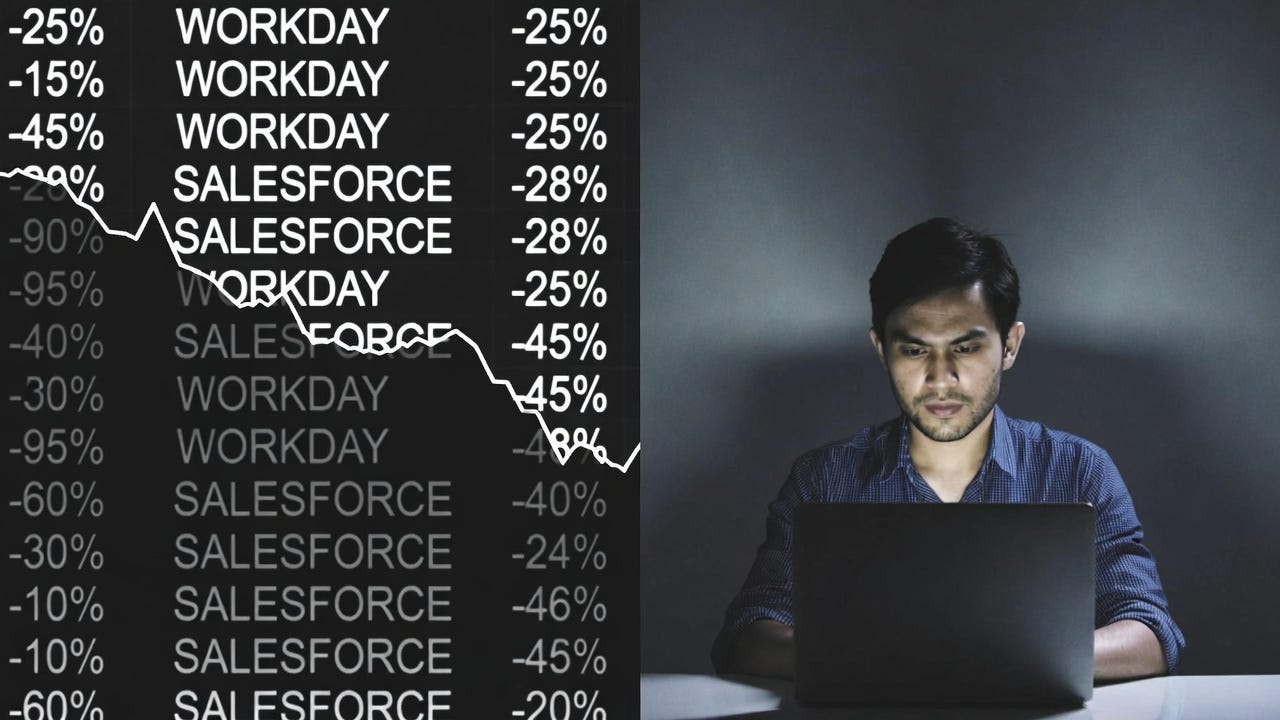
Not from a recession. That’s not from a scandal. Not because a single company made a catastrophic mistake. Larry Ellison lost nearly $40 billion since January. Steve Ballmer watched close to $29 billion evaporate from his net worth. Jeff Bezos, the AppLovin founders, the Workday co-founders — all of them absorbing losses that would be the largest financial events most people will ever read about in a single lifetime.
And the market isn’t panicking. It’s adjusting. There’s a difference.
What the market is slowly pricing in right now is one of the most consequential shifts in economic history: strategic intelligence, the ability to think faster and wider than everyone else in the room, is becoming a commodity. Accessible to anyone. It’s as cheap as a subscription. And that changes everything for the people who built their entire empires on being smarter than everybody else.
What Actually Triggered This
Early February 2026. Anthropic quietly launched an AI legal tool designed for in-house counsel. Within hours, LegalZoom lost 20% of its stock value in a single trading session. That one launch cascaded into what analysts started calling a Doom Loop — a self-reinforcing spiral where AI disruption fears kept feeding each other.
In 2026, Amazon will spend $200 billion on infrastructure, a 53% jump from last year. Software stocks across the board collapsed. Adobe, Salesforce, and ServiceNow each dropped between 25% and 30% year to date. The S&P North American Software Index posted its worst January since 2008. J.P. Morgan estimated that some $2 trillion was wiped from software market caps in a matter of weeks.
This is not a correction. This is a reclassification.
The market is asking, out loud, what a business built on selling intelligence is actually worth in a world where intelligence is being distributed for $20 a month.
The History Nobody Is Reading Right Now
To understand what is actually happening, you have to go further back than February.
Every era produces its own form of elite power, and that power is always tied to something scarce. In medieval Europe, it was violent. The feudal lord dominated because he controlled the only reliable force capable of protecting the land and its people. Later, it became property ownership, then industrial capital.
In the 20th century, it became information asymmetry — the ability to process complexity faster than anyone else. The CEO who could coordinate 100,000 employees. The fund manager who could anticipate market movements before the crowd. Finally, the senator who could aggregate and navigate the preferences of millions of constituents simultaneously.
All of that concentrated power rested on one structural foundation: the human brain can process only a limited amount of information. The bottleneck protected the people at the top.
AI is removing that bottleneck.
When every professional, every small business owner, every independent contractor can deploy dozens of specialized agents that negotiate, analyze, and synthesize on their behalf, the value of being a well-connected, high-billing human intermediary drops precipitously.
Why pay a strategy consultant €1,000 an hour when a €20 monthly subscription does the same work? It is not my argument.
It is mathematics — the same mathematics that investors are currently running on their spreadsheets as they look at legacy software valuations and quietly lower their price targets.
