

Watch this video. It’s probably the most impressive robotic demonstration ever performed.

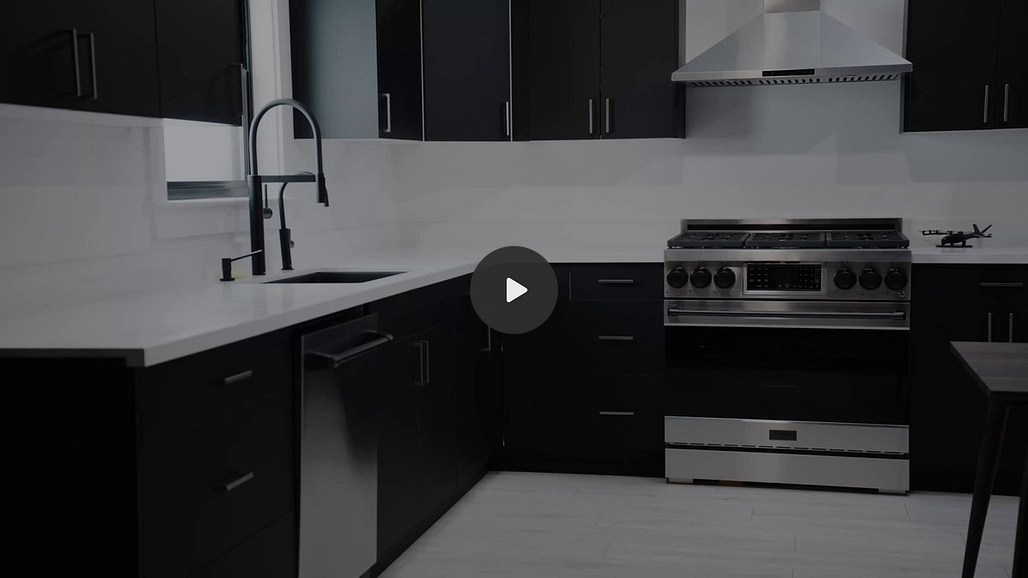
What you just saw is 4 minutes of total autonomy — no human intervention. No tele-operation. 61 consecutive actions without interruption.
This isn’t a fake video, sped up, or remotely controlled like Neo. This is a robot unloading a dishwasher, crossing a kitchen, putting dishes in cabinets, then reloading the dishwasher and starting it.
To add to this, this robot, or a previous iteration, had already been in operation for 11 months at a BMW factory.
Figure just unveiled Helix 02 on January 27, 2026. According to them, this is the most complex autonomous task ever performed by a humanoid robot. And honestly, after analyzing the technical details, I find it hard to disagree.
But the most fascinating part isn’t what the robot does. It’s how it does it. And that’s where this gets really interesting.
The Problem Nobody Could Solve
For decades, humanoid robotics has been hitting an invisible wall called “locomotion manipulation.”
The principle is simple to understand. When you carry an object, your balance changes. When you take a step, your reach changes. Your arms and legs constantly constrain each other.
Robots knew how to walk. They knew how to manipulate objects. But doing both simultaneously, fluidly and continuously, remained the unreachable grail.
The classic solution was to slice the problem into pieces. The robot walks, then stops. It stabilizes. Then it grabs an object. Restabilizes. Then walks again.
These transitions between states are slow, fragile, and completely artificial. It’s similar to pausing for three seconds every time you reach for your coffee cup while heading to your desk.
This is precisely what 02 just solved.
But wait.
The real technical prowess hides in the architectural details. And this is where Figure did something nobody had attempted before.
02 operates with three brains working at different speeds.
Think about your nervous system. When you walk on a pebble beach, you don’t need to think about each ankle adjustment. Your spinal cord handles it instantly.
That’s exactly the role of System Zero. System Zero runs at 1,000 Hz — 1,000 decisions per second — to manage balance, contacts, and whole-body coordination. In the time it takes you to blink, this system made 300 decisions.
And here’s the detail that’s anything but trivial: this system was trained on over 1,000 hours of human movement data. The robot doesn’t apply mathematical formulas to stay upright. It learned to move like a human.
So, what is the result? 1,095,400 lines of C++ code replaced by a single neural network with barely 10 million parameters.
Above that, System One operates at 200 Hz. This is the robot’s motor cortex. The system converts visual input from cameras and touch data from fingers into commands for body joints.
This marks a historic moment in humanoid robotics, with a single neural network governing every aspect. Legs, torso, head, arms, wrists, and each finger.
Finally, System Two thinks slowly — between 7 and 10 times per second. It’s the strategic brain that understands language and plans action sequences.

When The Robot Uses Its Entire Body As A Tool
This detail seems minor, but it changes absolutely everything.
