

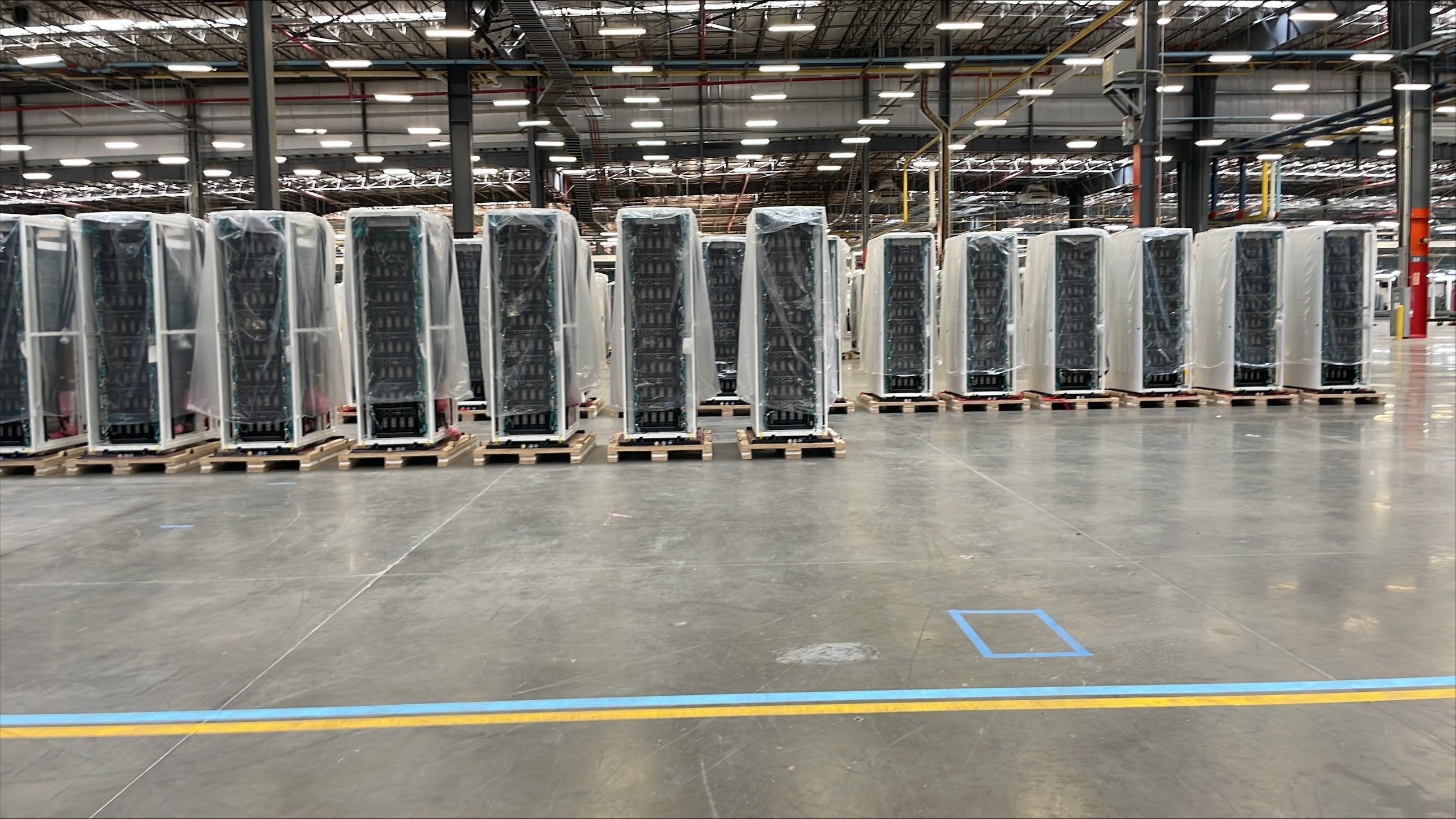
2 gigawatts of computing power. 55,000 GPUs. $18 billion invested in a single site.
These numbers don’t come from science fiction. They describe what’s happening right now in Memphis, Tennessee. And it’s only the visible part of a strategy that could redefine who controls global energy in the next five years.
We keep talking about AI, electric vehicles, satellites, and robots. However, very few people see how all these different areas are related. Yet when you look closely at the numbers, a reality emerges.
We might be witnessing the construction of the largest infrastructural monopoly since Standard Oil. And this time, the stakes aren’t petroleum. It’s the energy that will power 21st-century artificial intelligence.
I’m going to show you the precise timeline of this transformation and why giants like Microsoft and Google are already behind.
The Tesla Division Nobody Was Watching Just Became the Most Profitable
Let’s start with what everyone missed in Tesla’s latest financial results.
In Q3 2025, the energy division hit a gross margin of over 30%. To put that in perspective, that’s nearly double the automotive margin. The division nobody was looking at became the most profitable part of the company.
Energy revenues reached $3.4 billion for the quarter with a record gross profit of $1.1 billion. Over the trailing 12 months, Tesla deployed 45 GWh of storage, and the company is on track to exceed 100 GWh of total deployed capacity in the coming quarters.
What makes this growth different is the Auto-bidder software, Tesla’s AI platform that automatically manages energy trading on wholesale markets. The system makes buy and sell decisions thousands of times per day in milliseconds, optimizing revenue based on price fluctuations.
When electricity is cheap at 3 AM, it is stored. When prices explode in the late afternoon, it sells back.
Virtual power plants amplify this effect. Thousands of home Powerwall batteries connected function as a single distributed power plant. Tesla isn’t just selling hardware anymore. Tesla is becoming a global energy operator that manufactures its own infrastructure.
The Starlink Connection Nobody’s Talking About
Here’s where it gets really interesting. Distributed energy systems need connectivity.
