

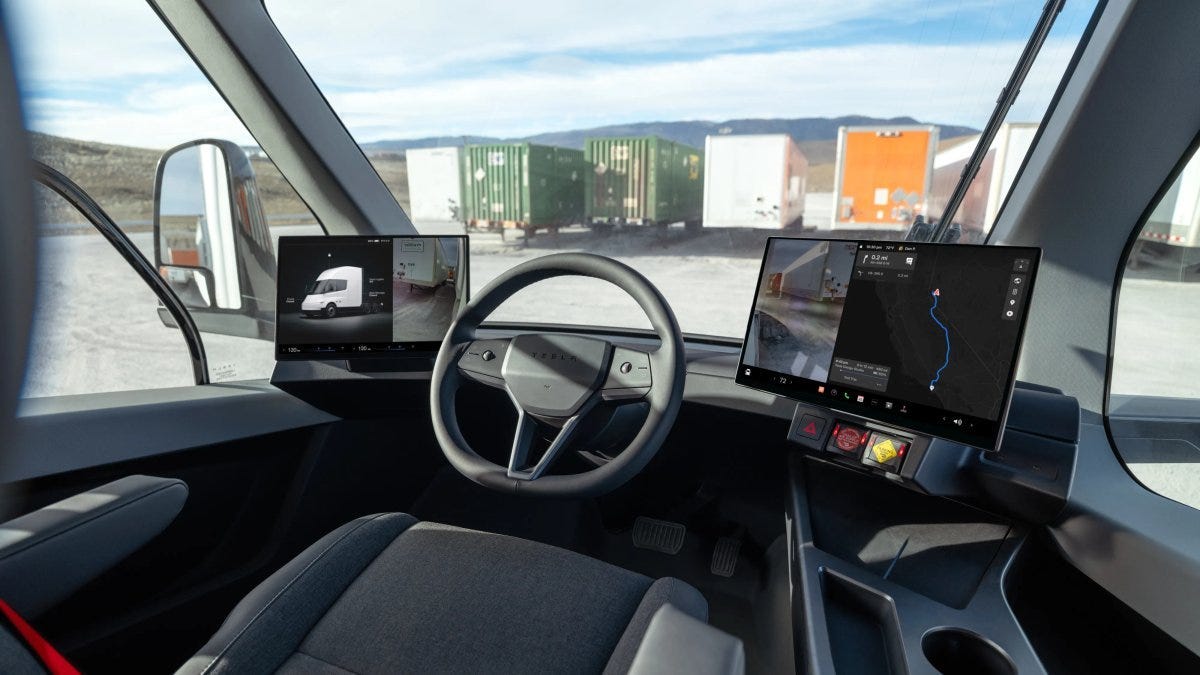
I am going to tell you something about Tesla that almost nobody covers correctly. The company is not primarily fighting over cars right now. It is fighting over the foundation that everything else will run on for the next fifty years.
The story starts with a battery.
Not the kind in your TV remote. A battery technology that, if Tesla lands it before anyone else does, would make the current generation of electric vehicles look like rough drafts, collapse the economic model of the global oil industry, and unlock humanoid robotics at a scale that isn’t currently possible. And if Tesla doesn’t land it in time, China will have already built the moat.
China Already Controls the Battlefield
To understand what’s actually at stake, you need to understand the current state of the game. China dominates the electric vehicle market, and not by a narrow margin. BYD, CATL, NIO, and a dozen other Chinese manufacturers first closed the gap with Western automakers, then surpassed them where it hurts most: price. You can buy a fully competitive Chinese EV today at a price that would make any European or American engineer wince.
But it’s not just assembly. China controls a disproportionate share of global battery production. It holds the supply chains for lithium, graphite, and rare earth materials. It holds the supply chain itself. According to several analysts, this is the exact reason Tesla has altered its internal priorities in recent months; for the first time in a long time, Tesla isn’t primarily competing based on its vehicles. It is competing to retain its status as a technology leader while China chips away at that status, quarter by quarter, faster each time.
Many sources, including industry insiders, indicate that Elon Musk’s answer is “solid state.”
What “Solid State” Actually Means
If you aren’t in the field, it sounds like a technical footnote. It isn’t.
Every lithium-ion battery in use today contains a liquid electrolyte. The ions travel through that liquid between the electrodes. It works, but the liquid creates problems: fire risk, thermal degradation over time, and hard limits on energy density. A solid-state battery replaces that liquid with a solid electrolyte. The result is dramatically improved safety, substantially higher energy density, charging speeds that can approach filling a petrol tank, and a lifespan that makes today’s batteries look disposable.
This analogy makes this concrete:
Remember hard disk drives? The ones with the mechanical arm that physically moved across a spinning platter to read data? Engineers knew they were ingenious. They were also slow, fragile, and limited by the physics of mechanical movement. When solid-state drives arrived, the arm disappeared.
No moving parts, no cooling fluid, just storage on a chip.
Everything became instantaneous and silent. The liquid-to-solid transition in batteries follows the same logic, and the resistance from the industry sounds familiar, too. Skeptics of Solid State Drive technology during its early days asserted it was too pricey, too difficult to manufacture in large quantities, and would always be restricted to top-tier uses. That turned out to be wrong.
Information from industry leaks, attributed to component suppliers, reveals Tesla’s development of prototypes designed for energy densities near 500 Wh per kilogram. Most current batteries deliver between 250 and 300 Wh/kg.
If those numbers hold, certain Tesla models could theoretically exceed 1,200 kilometers of range on a single charge. At that level, range anxiety doesn’t diminish. It disappears entirely. The electric vehicle stops being an urban compromise and becomes a full replacement for combustion in every use case and every climate condition.
But Reuters has reported that Tesla doesn’t see this battery as an automotive component. It sees it as the foundation of its entire future ecosystem: the Cybercab robotaxi, the Semi truck, Powerwall home storage, Optimus robots, and certain AI infrastructure projects.
The more powerful and affordable the battery becomes, the further Tesla can push every other frontier at once.
February 2026: The Breakthrough That the Industry Called Impossible
The secrecy around Tesla’s battery development is, according to anonymous current and former employees, closer to a military operation than a corporate R&D program. Entire sections of the Texas and Nevada Gigafactories require special authorization badges, and some Tesla engineers reportedly have never entered those zones. Subcontractors sign multi-level NDAs. Previously, the company would share information about future milestones, but this practice was discontinued to avoid alerting Chinese competitors and giving them time to prepare their responses.
But on February 1, 2026, Musk broke the silence. He publicly acknowledged what his engineering teams had achieved: the dry electrode process, working at an industrial scale.
This is not a footnote. The dry electrode process had been widely considered impossible to execute at production volume since Tesla first proposed it at Battery Day in 2020. By eliminating liquid solvents in electrode manufacturing, this technique offers benefits such as reduced production costs, lower factory energy consumption, simplified manufacturing lines, and, crucially, a solvent-free environment that is suitable for integrating solid-state materials. The rest of the industry spent five years watching Tesla fail at it. Then Tesla’s VP of 4680 batteries, Bonne Eggleston, posted two words on X: “Both electrodes.” Meaning both anode and cathode. The complete process.
At scale.
Musk described the difficulty with characteristic understatement: “Incredibly difficult.” The patent, filed January 29, 2026, protects not the performance characteristics, but the manufacturing method itself.
Three weeks later, on May 12, Tesla announced $250 million in additional investment at Gigafactory Berlin to scale 4680 cell production from 8 GWh to 18 GWh annually, creating over 1,500 jobs. The total investment at the site now approaches €1 billion. This is not R&D money. This is production money — concrete, equipment, and hiring commitments.
The Problem With the Cells They’re Scaling Right Now
There’s a tension in Tesla’s current strategy that deserves honesty.
The 4680 cells being scaled at Berlin are underperforming relative to what they’re replacing. Independent tests of the 4680 pack installed in European Model Y variants show a lower range than the previous LGES 2170 pack and a noticeably slower charging curve. Order cancellations have been reported in France and Norway. The 4680, right now, is inferior to the cells it replaced in the vehicles where it has been deployed.
Tesla is investing at scale in a technology the market considers substandard. That is either pure stubbornness or very long-range vision. Knowing the trajectory of Musk’s other bets — SpaceX, autonomous driving, Optimus — the more likely answer is both. The dry electrode breakthrough makes the 4680 a strong candidate for being the stepping stone Tesla always intended: an intermediate platform on which the next generation of chemistry will be built.
This is also where Wright’s Law becomes important. Each time cumulative production of a manufactured object doubles, its unit cost falls by a fixed percentage — driven not by better supplier negotiations but by the learning generated by the act of mass production itself. It’s why solar electricity went from $10 per watt in the early 2000s to under $0.20 today. Every 4680 cell that rolls off the line, including the ones that disappoint, is teaching the production line something no engineer could derive at a whiteboard. The Financial Times has reported that Tesla’s heavy investment in electrode coating is specifically because that process is compatible with integrating new materials, which reads like preparation rather than commitment.
2027 to 2028: The Window Everyone Is Watching
The most frequently cited window in the leaks is late 2027 to 2028. That is when Tesla could stage what multiple sources describe as its largest product reveal since the Cybertruck unveil. Not just a new battery. According to those reports, the architecture itself.
One likely path, which several analysts have suggested, is a hybrid approach: an architecture that combines liquid and solid elements to hit the market faster rather than waiting for the perfect, fully solid-state design. Get something functional on the road rather than spending five more years chasing perfection. Classic Musk playbook.
Toyota has been announcing solid-state batteries for a decade. There is still no mass production on the horizon, which tells you something about how genuinely difficult the problem is. The materials remain the fundamental challenge: a solid electrolyte must be stable, affordable, thermally resilient across the full range of climates a vehicle encounters, and manufacturable at scale. Many promising materials crack during charging, degrade over time, or lose efficiency after a few hundred cycles. Getting this right in a laboratory is one thing. Getting it reliable enough to ship in millions of vehicles that need to perform in Moscow in January and Phoenix in July is an entirely different level of difficulty.
China Is Not Watching From the Sidelines
The competitive picture is the most underappreciated part of this story.
CATL, the world’s largest battery manufacturer, is running pilot development on solid-state cells targeting 500 Wh/kg — the same energy density Tesla’s prototypes are aimed at. BYD is working on solid-state battery technology that uses a lot of nickel and silicon. They aim for an energy density of about 400 Wh/kg and claim it could last up to 10,000 charge cycles, which would be incredibly long-lasting. Behind them, Changan, Dongfeng, GAC, and a cluster of other Chinese manufacturers have all scheduled demonstration vehicles with solid-state batteries from 2027 onwards.
The strategic move that doesn’t get enough attention: in January 2026, China published the world’s first national standard for solid-state batteries, set to take effect in July. China is writing the definition of what “solid state” officially means before the first production batteries reach the market. In any industry, the entity that sets the definitions ends up setting the market conditions. This is the kind of long-game institutional play that built China’s dominance in lithium-ion in the first place. Those who defined the standards for conventional batteries in the 2000s watched that industry become a $300 billion market that others had ceded to them.
The battery race is being called the space race of the twenty-first century by some analysts. That comparison is a bit much. But the energy dimension is real. Some analysts speak of an energy arms race where global leadership will belong to those who master the best storage systems. The recent volatility in oil prices illustrates precisely how exposed energy-intensive economies remain to supply chain disruptions in fossil fuels.
The Semi Changes the Economic Argument
In April 2026, the California Air Resources Board published Executive Order A-374–0095, confirming that the Tesla Semi Long Range carries an 822 kWh battery pack, sufficient for approximately 500 miles under a full 82,000-pound load. The Standard Range sits at 548 kWh.
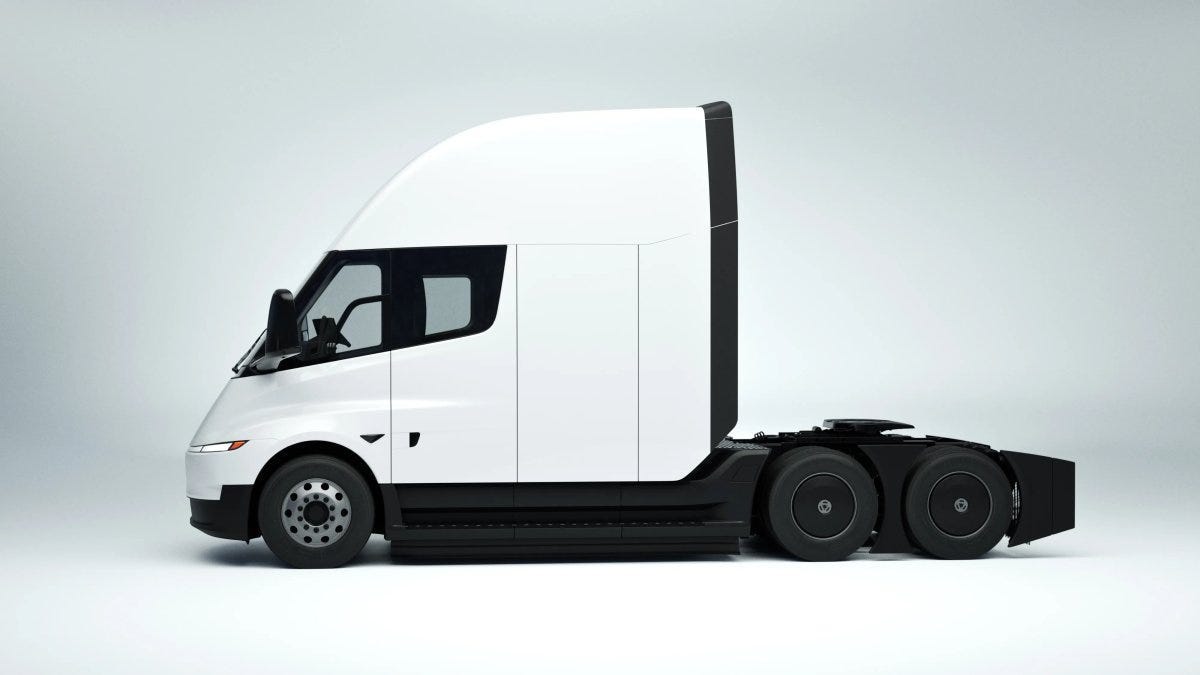
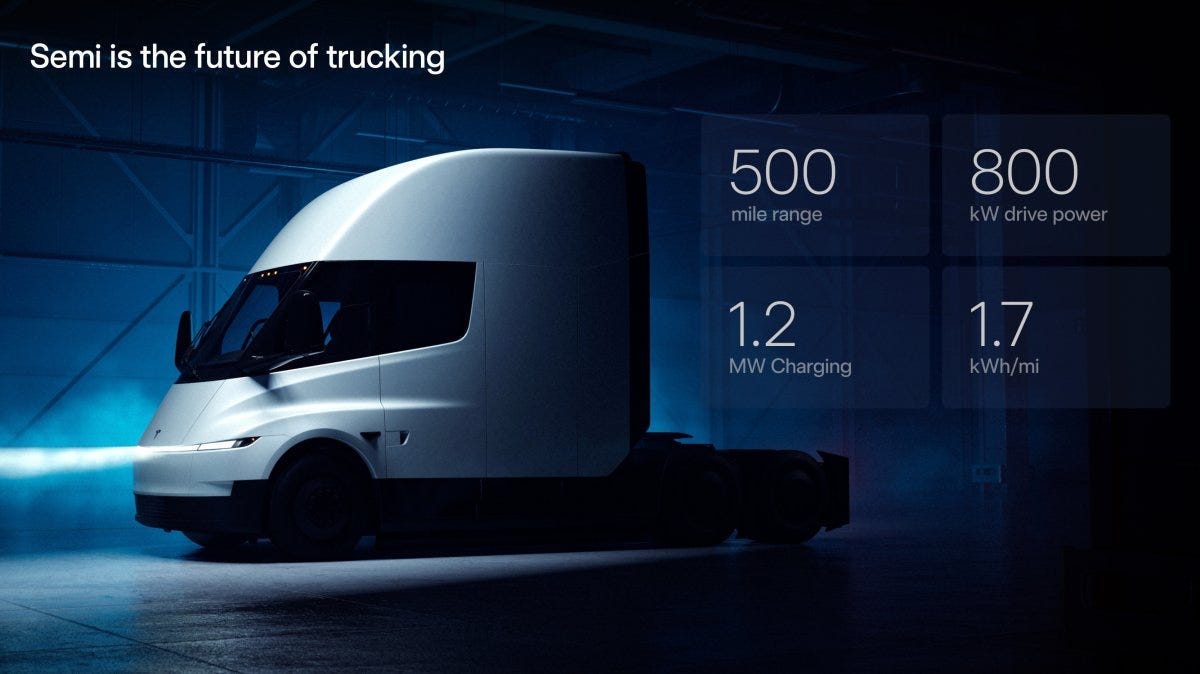
This matters enormously. In Europe, over 75 percent of goods travel by road. Logistics companies make every decision based on cost per kilometer per tonne — it is their survival metric. Once electric trucks can deliver a cheaper total cost per kilometer compared to diesel, while also removing the daily unpredictability of fuel prices affected by geopolitics, the decision to switch will be irresistible. It becomes rational and then inevitable. The problem until now has always been the range. A long-haul driver needs 600 to 800 kilometers on a single charge with a full load. The Semi’s confirmed specs are making that credible.
Apply next-generation solid-state batteries to a truck platform in that weight class, and you are not talking about disrupting a segment of the automotive market. You are talking about a potential restructuring of the entire diesel long-haul industry. That is a market measured in trillions of dollars globally.
The Modular Battery That Rewrites the Resale Market
Among the leaked elements of Tesla’s planning: a fully modular battery architecture for its next vehicle generation. A buyer would be able to replace their battery module after several years with a newer, higher-capacity version, gaining range without buying a new car. If this materializes, it solves one of the biggest objections to purchasing a used electric vehicle, the fear that the battery is already degraded and cannot be economically replaced. It also creates a recurring revenue stream for Tesla — battery upgrade subscriptions, the Apple model applied to transportation. You keep the chassis. You upgrade the engine.
The Two- to Three-Year Clock
The question is not whether solid-state batteries will happen. The science is sound. The question is who ships them first, in volume, at a cost that scales, before the other side locks in the standard.
Tesla’s case for optimism rests on real pillars: the dry electrode breakthrough that the industry thought was impossible, the Berlin investment that signals production seriousness, over a decade of battery manufacturing institutional knowledge, and the manufacturing scale learning curve that nobody can shortcut. The Wall Street Journal has reported that in a private investor meeting, Musk said current batteries are an intermediate step, and that the industry is approaching a moment after which vehicles will never be the same. Musk rarely makes that kind of statement without a concrete technological basis behind it. The Falcon 9, the Cybertruck, the dry electrode process — they all started as announcements that the industry dismissed.
The concern is timing. Chinese competitors are not slowing down. They are cutting prices, growing volumes, and extending their presence in Europe, Latin America, and Southeast Asia. The market clock does not pause while Tesla runs its battery experiments. Investors have already priced the expectation of a breakthrough into Tesla’s valuation. If the breakthrough doesn’t arrive on the expected timeline, that premium will come out of the share price.
This is precisely why this battery program is not, for Musk, an R&D project. It is an existential bet. And right now, in June 2026, the race is still wide open.
Do you think this is another Musk’s crazy idea or a good investment for Tesla? Let me know in the comments.
I am curious whether solid state batteries will have the same charging limitations current lithium ion-batteries have. For example, e-car manufacturers routinely advertise that their cars have a range of x miles. But this mileage estimate is based on depleting a fully charged battery. Good battery practice, however, means never depleting a battery below 20% capacity and never charging beyond 80% capacity. It is the dirty little secret that most e-car owners learn only after they have purchased a vehicle. Thus the actual, real life range of an electric vehicle is only 60% of the advertised range. That’s a significant decrease. If solid state batteries can deliver full capacity instead of only 60% that in itself would be a big advance.